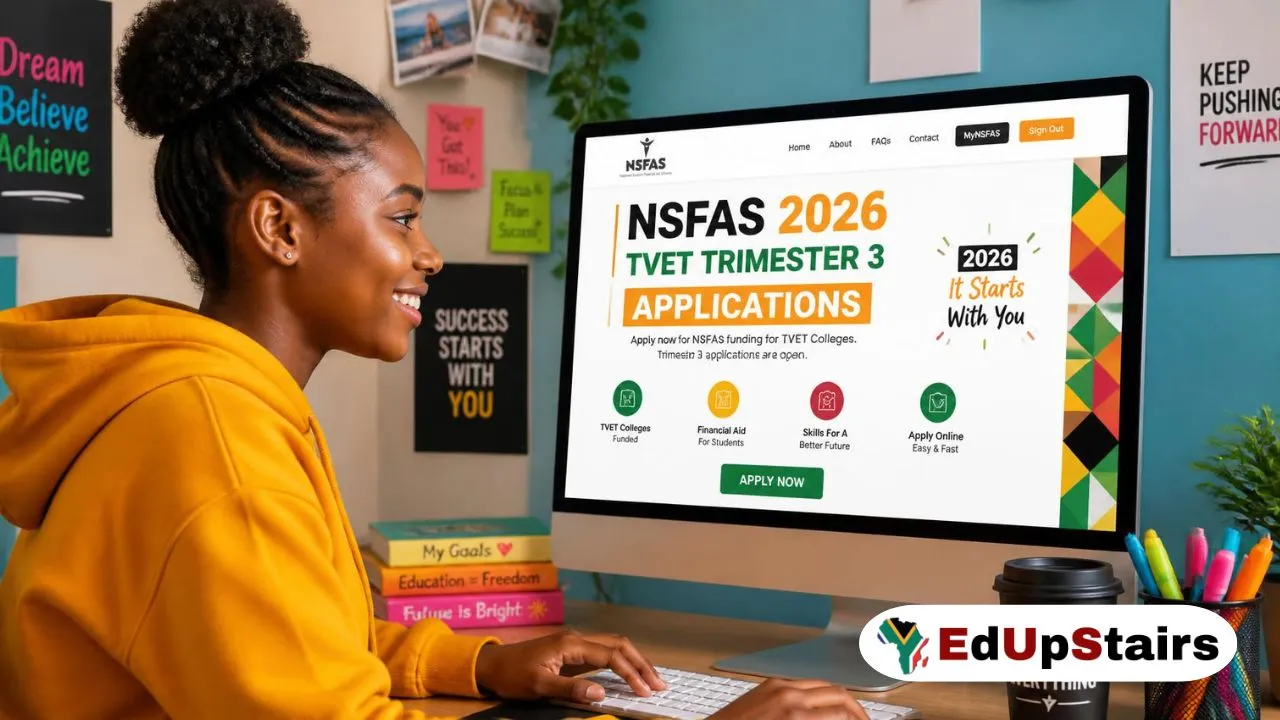

The National Student Financial Aid Scheme (NSFAS) is a government initiative that provides financial support to eligible South African students who wish to further their studies at Public Universities or TVET colleges. If you’re planning to study in 2025 and need funding, NSFAS is one of the best options available. Here’s a detailed guide on how to apply for NSFAS, step-by-step.
Step 1: Check if You Qualify for NSFAS
Before starting your application, make sure you meet the eligibility criteria:
- You are a South African citizen.
- Your combined household income is not more than R350,000 per year (or R600,000 for students with disabilities).
- You are applying to study at a public university or TVET college, or you are already studying and need funding.
- You are not funded by another bursary for the same qualification.
Step 2: Create a myNSFAS Account
- Go to the NSFAS website: https://www.nsfas.org.za.
- Click on the “myNSFAS” tab and then select “Register”.
- Provide your ID number, full names, email address, and cellphone number.
- Create a password (keep this safe).
- Upload a clear copy of your ID document or birth certificate.
- Check your email or SMS for a verification link and confirm your account.
Step 3: Login to myNSFAS and Start Your Application
- Go back to the NSFAS website and log in using your ID number and password.
- Click on “Apply” and begin the online application form.
- Fill in your personal details – including your home address, contact details, and school information.
- Indicate your preferred institution and course of study.
Step 4: Upload Supporting Documents
You’ll need to upload clear, certified copies of the following documents:
- Certified ID document or birth certificate.
- ID documents of parents or guardians (if available).
- Proof of income for parents/guardians (e.g., payslips, SASSA letter).
- Consent form signed by your parents or guardians, allowing NSFAS to verify their income.
- If you’re living with a disability, include a Disability Annexure A form (available on the NSFAS website).
- If you’re an orphan or don’t have family support, you can submit a SASSA letter or social worker report.
Make sure each file is clearly named and properly scanned to avoid rejection.
Step 5: Submit Your Application
Once all sections are completed and documents are uploaded:
- Click “Submit” at the end of the form.
- Wait for a confirmation message on screen and via email/SMS.
- Keep your reference number safe — you’ll need it for follow-ups.
Step 6: Track Your Application Status
After submission:
- Login regularly to your myNSFAS account to check your application status.
- NSFAS may contact you via email or SMS for additional documents or information.
- You will receive updates like “Application Submitted”, “Filtering”, “Funding Eligibility”, “Awaiting Academic Results”, etc.
- Final funding decisions are usually made before the academic year begins.
Important Tips
- Apply early — don’t wait for the closing date (usually in late January for 2025 applications).
- Make sure your contact details (email and cellphone) are correct and accessible.
- Double-check that all documents are clear, legible, and up to date.
- Keep a copy of your application and reference number.
What Happens if You Are Approved?
If your application is successful, NSFAS will:
- Pay your tuition fees directly to the institution.
- Provide allowances for books, meals, accommodation, and transport (depending on your needs and type of institution).
- Continue funding you annually, as long as you pass your modules and remain eligible.
Conclusion
Applying for NSFAS is a straightforward process if you are prepared with the right documents and follow each step carefully. This funding can be a life-changing opportunity, allowing you to focus on your education without worrying about financial burdens. Don’t miss out — start your application as early as possible and follow through until you receive your results.
Related Articles:
Bursary Application Calendar for South African Students: When to Apply and Never Miss a Deadline
How to Prepare for Bursary Interviews: A Complete Guide for South African Students
What Happens After You Apply for a Bursary? Understanding the Selection Process
How to Find Fully Funded Bursaries in South Africa: A Complete Guide for Students
Common Reasons South African Bursary Applications Get Rejected (And How to Avoid Them)
NSFAS vs Bursaries vs Scholarships: What Is the Difference?
How to Write a Professional Student CV for Bursary Applications
How to Write a Winning Bursary Motivational Letter (With Examples)
How to Appeal an NSFAS Application Rejection (Step-by-Step Guide) 2026
How to Create a myNSFAS Account for 2026 Applications
How to Check NSFAS Application Status: A Detailed Guide
You can also:
- View latest Internships
- View latest Learnerships
- View Latest Bursaries
- View latest Government jobs
- View latest Company Vacancies
- View latest Municipality vacancies
- Visit the Edupstairs blog for daily updates
EDUPSTAIRS IS A REGISTERED NON-PROFIT ORGANISATION NPO No: 232 – 182, PUBLIC BENEFIT ORGANISATION (PBO): 930066984. EDUPSTAIRS DOES NOT, IN ANY WAY OR FORM, SOLICIT MONEY OR CV’S FROM PEOPLE FOR JOBS OR UNIVERSITY APPLICATIONS. PLEASE BE AWARE OF PHONY JOB POSTINGS AND RECRUITMENT FRAUD. FOR MORE INFORMATION VISIT OUR SCAM/FRAUD ALERT PAGE HERE