
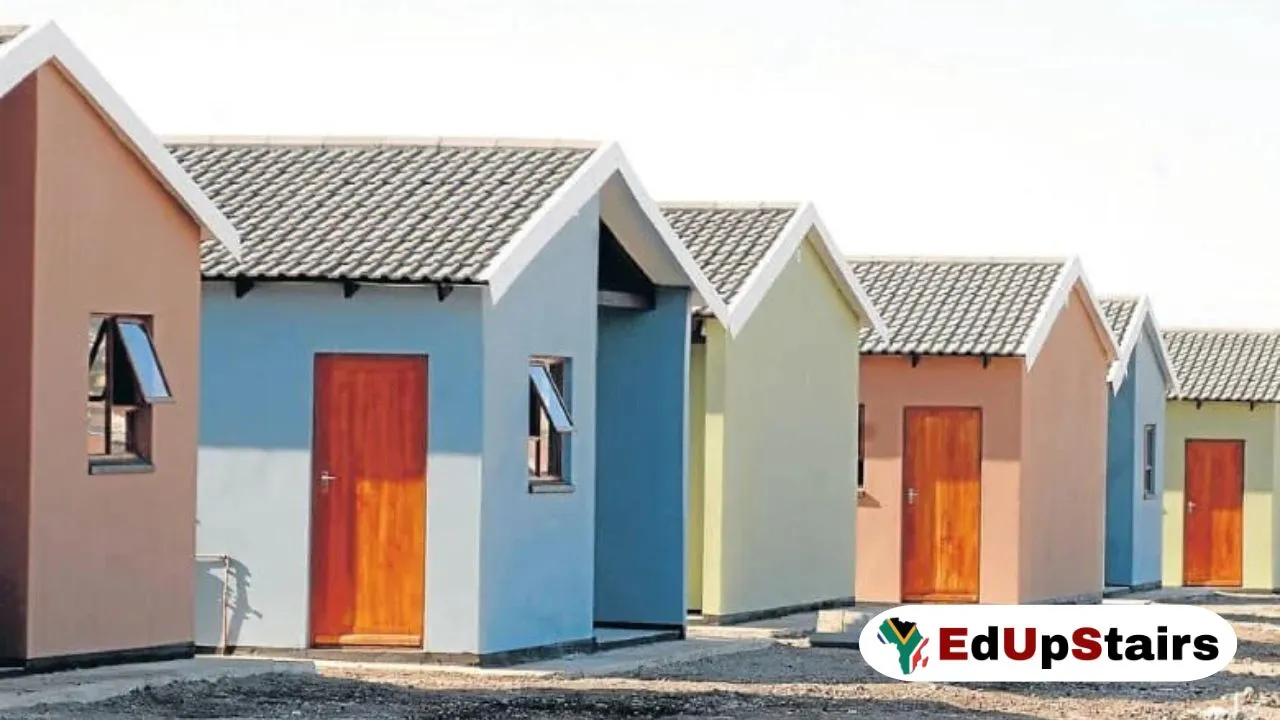

For South Africans who registered for an RDP house years ago and are still waiting, there is an important development worth knowing about in 2026.
Government has announced major housing delivery targets that include 39,058 housing units, the unblocking of 195 stalled housing projects, 25,186 serviced sites and the registration of 21,918 title deeds during the 2026/27 financial year.
This does not mean that every person on an RDP housing waiting list will automatically receive a house this year.
However, it does mean that thousands of government-subsidised housing opportunities are expected to move forward across South Africa, while government is simultaneously trying to deal with stalled projects, beneficiary administration and the long-running title-deed backlog.
For people who registered many years ago — including applicants whose records date back to the 1990s and 2000s — this is a particularly important time to check whether their information is still correctly recorded.
Quick Overview
- Country: South Africa
- Programme: Government-subsidised housing / RDP / Breaking New Ground (BNG)
- 2026/27 national housing-unit target: 39,058
- Serviced sites targeted: 25,186
- Stalled projects targeted for unblocking: 195
- Title deeds targeted for registration: 21,918
- Longer-term BNG target: 237,000 units under the 2024–2029 programme
- Who should pay particular attention: People who registered years ago and have received little or no feedback
- Important: Registration does not automatically guarantee allocation
- Action applicants should take: Check their housing subsidy status and make sure their details are up to date
Why This Is Good News for People Waiting for RDP Houses
The biggest reason this announcement matters is that government is not only talking about starting new housing projects.
It is also focusing on unfinished and stalled housing developments.
In her 2026/27 Human Settlements Budget Vote, Minister Thembi Simelane set targets that include:
- Delivery of 39,058 housing units
- Completion of 25,186 serviced sites
- Unblocking of 195 projects
- Registration of 21,918 title deeds
- Delivery of 2,878 social housing units
- Eradication of thousands of mud houses
- Delivery of housing for qualifying military veterans
This is significant because a housing backlog is not caused only by a shortage of new houses.
Some beneficiaries have been affected by projects that were started but later stalled because of issues such as contractors, infrastructure, land, planning, funding or other implementation problems.
In March 2026, government reported that more than 200 projects had previously been identified for unblocking, with housing units already being delivered through those interventions.
So when government says that another 195 projects are targeted for unblocking in 2026/27, people living near long-delayed housing developments should pay attention.
What About People Who Registered Many Years Ago?
This is one of the most important questions.
Some South Africans registered for government housing decades ago.
There are documented cases involving people who registered during the 1990s and remained on housing waiting lists for many years.
Gauteng provides one of the clearest examples.
Government previously acknowledged historical problems involving the 1994–1996 housing waiting lists. In those early years, municipalities maintained different types of housing lists before a standardised national system existed. The National Housing Needs Register was later developed to help record housing needs from municipal waiting lists.
Government has also specifically acknowledged the Gauteng 1996/97 housing-list backlog.
According to an official government response, Gauteng’s Housing Allocation Policy provides for 40% of housing allocations in departmental projects to be reserved for applicants from the 1996–1999 waiting list as part of efforts to address the historical backlog.
That is major information for people in Gauteng who applied during those years.
There have also been projects where applicants from 1996–1999, people with disabilities, elderly applicants and people whose subsidies had already been approved but who had not received houses or serviced sites were specifically prioritised.
Important clarification
Edupstairs found no evidence of a national policy stating that everybody across all nine provinces who registered in a particular year — such as 1996, 1998 or 2000 — will automatically receive a house in 2026.
Applicants should therefore be careful about social-media messages making claims such as:
“Everyone who applied before 2000 is getting an RDP house this year.”
That is not what the official information says.
Housing allocation remains dependent on factors including eligibility, beneficiary verification, provincial and municipal housing projects, available units, land, infrastructure, budgets and allocation policies.
The Bigger Good News: 237,000 BNG Housing Units Are Targeted by 2029
The current financial-year targets form part of a much larger government housing programme.
Government’s 2024–2029 targets include the delivery of approximately:
- 237,000 Breaking New Ground units
- 314,000 serviced stands
- 80,000 title deeds
- thousands of social housing opportunities
- upgrades to informal settlements
- housing assistance through other government programmes.
Breaking New Ground, or BNG, is the terminology commonly used for the modern government-subsidised housing programme that many South Africans still call RDP housing.
The Department of Human Settlements itself explains that government-subsidised houses are commonly known as RDP houses and are provided to qualifying beneficiaries through a government subsidy.
This longer-term target means housing delivery is not supposed to end with the 39,058-unit target for the current financial year.
Delivery is expected to continue through the remainder of the 2024–2029 government programme.
Evidence That Housing Delivery Is Actually Taking Place
These targets are not only appearing in planning documents.
Housing and title-deed handovers have been taking place during 2026.
For example, the Department of Human Settlements announced a July 2026 visit to North West where houses were being handed over from a project expected to deliver approximately 2,500 units by October 2026, together with title deeds for beneficiaries.
In Gauteng, Human Settlements announced housing and title-deed activities at the Impumelelo Mega Project, including the handover of close to 300 title deeds to rightful beneficiaries.
In Mpumalanga, government said the province was expected to deliver 2,500 title deeds as part of the 2026/27 national title-deed target.
In the Western Cape, a July 2026 title-deed handover in Oudtshoorn formed part of the nationwide Title Deeds Restoration Programme.
KwaZulu-Natal has also seen major housing activity. In April 2026, government reported that the uMshwathi Integrated Redevelopment Programme was expected to deliver 2,922 housing units, with 744 already delivered at the time of the announcement.
Parliament has also reported progress on efforts to unblock stalled developments in KwaZulu-Natal and North West.
The important point is that the current housing programme is national in scope.
If You Registered Years Ago, Do Not Simply Register Again Without Checking
This is particularly important.
Someone who registered many years ago may understandably think:
“My application is too old. I should just start again.”
Do not automatically assume that.
Historical housing records can matter.
The Department of Human Settlements recommends that applicants who have already applied follow up at the office where the application was originally made because that office may have the applicant’s file and can advise on progress or outstanding documentation.
Before attempting another application, establish what happened to the original record.
You should try to confirm:
- Whether your ID number appears on the housing system
- Whether your original application is still recorded
- Whether your subsidy has ever been approved
- Whether there are outstanding documents
- Whether your contact information is correct
- Whether your household circumstances need updating
- Whether your application is associated with a particular housing project
- Whether additional verification is required
Keeping the same cellphone number for 20 or 30 years is unrealistic. People move, get married, separate, change employment status and lose paperwork.
Your old housing application therefore deserves a proper follow-up.
Check Your RDP Housing Status Using Your ID Number
There is another important improvement for applicants in 2026: housing information can be checked online.
The official Human Settlements System Online (HSS) includes a “My Housing Subsidy” search facility where an applicant can enter an ID number to check the available status information associated with their housing subsidy.
The Department of Human Settlements itself directs applicants to this online system from its website.
This is particularly useful for people who:
- Applied many years ago
- Lost their housing reference number
- Have never received feedback
- Have moved since applying
- Changed their cellphone number
- Are unsure whether their application was captured
- Want to know whether subsidy information exists against their ID
Check your RDP housing application status: Official Human Settlements Housing Subsidy Status System
Edupstairs has also published a simple guide explaining how South Africans can use the official system:
How to Check Your RDP Housing Application Status Using Your ID Number
Use the Edupstairs RDP / BNG Housing Eligibility Checker
Before applying for government housing — or while trying to understand whether you may still meet the general requirements — readers can also use the Edupstairs RDP / BNG Housing Eligibility Checker.
The checker is intended as a pre-assessment tool to help users understand whether their circumstances broadly match government housing requirements.
It does not approve housing applications, allocate houses or replace an official Human Settlements assessment.
Think of it as a first check before dealing with the official process.
Who Generally Qualifies for a Government-Subsidised House?
According to the Department of Human Settlements’ published guidance, qualifying conditions include requirements relating to citizenship, household circumstances, income, previous housing subsidies and property ownership.
The Department currently lists requirements including being:
- A South African citizen
- Contractually capable
- Married or habitually cohabiting with a partner, or single with financial dependants, subject to applicable exceptions
- Within the qualifying household-income requirements
- A first-time government housing subsidy recipient
- A first-time homeowner.
Applicants should always verify the current criteria directly with Human Settlements because programme rules and individual circumstances matter.
Your Registration Date Alone Does Not Decide Everything
One misunderstanding needs to be addressed.
If Person A registered in 1998 and Person B registered in 2005, it does not necessarily mean Person A will automatically receive a house before Person B in every circumstance.
Housing allocation can be affected by:
- The province
- Municipality
- Housing project
- Beneficiary verification
- Availability of completed houses
- Whether the applicant still qualifies
- Priority categories
- Whether the original project was delayed or cancelled
- Availability of suitable land
- Bulk infrastructure
- Provincial allocation policies
- Whether the applicant’s details can be verified
This helps explain why two people who applied around the same time can have completely different experiences.
Older Applicants Should Pay Particular Attention
If you registered in the 1990s or early 2000s and are still waiting, do not assume government has automatically forgotten about your application.
Historical backlogs are real and have been officially acknowledged.
The Gauteng example is especially important because government has explicitly recognised applicants from the 1996–1999 waiting list in its allocation policy.
People with extremely old applications should therefore consider doing three things:
- Check the official HSS system using your ID.
- Visit or contact the housing office where you originally registered if possible.
- Make sure your contact and household information is current.
Do not pay anyone to “activate” your old application.
Another Big Development: Government Is Modernising the Housing Database
There is another development that could become important for future applicants and existing beneficiaries.
Government has acknowledged limitations in the existing Housing Subsidy System and has been working with the State Information Technology Agency on a National Digital Human Settlements Management System.
According to Human Settlements, the new system is intended to improve efficiency, transparency and accountability, including management of housing beneficiary lists, construction projects, land and infrastructure.
For applicants, better beneficiary management could be particularly important.
Housing databases are only useful if the information in them is accurate and authorities can identify and contact the correct beneficiary.
Title Deeds Are Also Being Accelerated
The housing programme is not only about constructing new houses.
Thousands of families already occupy government-subsidised properties but have experienced delays obtaining title deeds.
Government’s Title Deeds Restoration Programme is trying to address this problem.
According to the Department, more than 80,000 title deeds had been issued to government-subsidised housing beneficiaries since the Title Deeds Fridays Campaign was launched in 2023.
For 2026/27 specifically, the national target is another 21,918 title deeds.
A title deed is extremely important because it formally records ownership of the property.
You May Also Like…
- What Happens If Two People Apply for Government Housing Using One Address in South Africa?
- How South Africans Can Apply for BNG (Breaking New Ground) Housing in South Africa
- How Government Verifies RDP Housing Beneficiaries in South Africa
- How to Apply for Government Housing Subsidy in South Africa
- South Africans Can Now Check Their RDP Housing Application Status Online Using Their ID Numbers
- How You Can Get Financial Support to Buy or Build Your Affordable First Home in Urban or Rural Areas in South Africa
What People on RDP Waiting Lists Should Do in 2026
The current housing announcements should encourage action — not panic and not false hope.
If you registered for government housing years ago:
- Check your status through the official HSS platform.
- Verify that the correct ID number is associated with your application.
- Contact the office where you originally registered if your status is unclear.
- Update changed cellphone numbers and contact information.
- Keep your original housing reference number if you still have it.
- Keep copies of correspondence and supporting documents.
- Follow announcements from your provincial Department of Human Settlements and municipality.
- Ask about beneficiary-verification programmes in your area.
- Pay attention to announcements about previously stalled housing projects.
- Never pay someone who promises to move you up the housing list.
Do Not Fall for “RDP House Approval” Scams
Whenever major housing announcements are made, scammers can take advantage of desperate applicants.
Be extremely cautious if someone says:
“Pay R500 and I will put your name on the list.”
“I work at Housing and can get your house approved.”
“Your RDP house is ready, but you must pay an administration fee.”
“I can move your application to the top of the waiting list.”
Government-subsidised houses are not supposed to be privately sold to applicants by officials or middlemen.
The Department describes government-subsidised/RDP housing as a programme where qualifying beneficiaries receive a fully built house provided by government.
Never hand money to someone promising guaranteed allocation.
Useful Official Destinations for Readers
Two particularly useful official destinations are the Department of Human Settlements and the official Housing Subsidy System.
Department of Human Settlements
Use this website for official housing programmes, announcements, policies, contact information and Human Settlements updates.
Official Housing Subsidy Status System (HSS)
Applicants can use the HSS platform’s “My Housing Subsidy” facility to search using their South African ID number.
Tools you may find useful:
- SETA Platform
- RDP / BNG Housing Eligibility Checker
- SASSA Grant Eligibility Checker
- SAPS / Metro / Traffic / DCS Eligibility Checker
- Youth Employment Eligibility Checker
- SA Bursary & NSFAS Eligibility Checker
- UIF Benefits Eligibility Checker and Payment Estimator
View Other Employment Opportunities here
Need Help?
Edupstairs Advice
If you registered for an RDP house 10, 15, 20 or even nearly 30 years ago, 2026 is a good year to check your records again.
There are three reasons.
First, government is targeting tens of thousands of housing units nationally.
Second, stalled housing projects are specifically being targeted for intervention.
Third, government is improving beneficiary management while continuing housing and title-deed handovers.
But do not interpret these developments as a guarantee.
The safest approach is:
Check. Verify. Update. Follow up.
If your application is still on the system, make sure the information is correct.
If you cannot find it, contact the relevant housing authority.
If you registered during the 1990s, specifically mention your original registration year when following up and take any old proof of registration you still have.
And most importantly, do not pay anyone who claims they can get you an RDP house faster.
Frequently Asked Questions
-
Is government building RDP houses in 2026?
Yes. Government’s 2026/27 Human Settlements targets include the delivery of 39,058 housing units, together with serviced sites, social housing and other interventions.
-
Are people who applied in 1996 being prioritised?
There is specific evidence for Gauteng. Government has stated that the Gauteng Housing Allocation Policy reserves 40% of allocations in departmental projects for applicants from the 1996–1999 waiting list to address the historical backlog. This should not be interpreted as a nationwide rule applying identically to every province.
-
What if I registered in 2000, 2005 or 2010?
Your application may still be relevant. Check its status and contact the appropriate housing authority. There is no national rule guaranteeing allocation purely because you registered in a particular year.
-
Will all old RDP applicants receive houses in 2026?
No. The national targets represent planned housing delivery, not a guarantee that every registered applicant will receive a house during 2026.
-
How many housing units does government plan to deliver in 2026/27?
The national target announced by the Department of Human Settlements is 39,058 housing units.
-
What does “unblocking housing projects” mean?
It refers to interventions intended to get stalled or delayed housing developments moving again. Government has set a 2026/27 target involving 195 projects.
-
How can I check my RDP status?
Use the official Housing Subsidy System and enter your ID number in the “My Housing Subsidy” facility.
-
What if my application does not appear online?
Do not immediately conclude that your application has been cancelled. Contact the housing office where you originally applied or the relevant provincial/municipal Human Settlements office to verify the record.
-
Should I submit another application if I applied years ago?
Check the existing application first. The Department advises people who have already applied to follow up with the office where the application was made, particularly because that office may have information about the applicant’s file and outstanding requirements.
-
What if my phone number has changed since I registered?
Update your contact details with the relevant housing authority. This is especially important for people who applied many years ago.
-
Does being on the waiting list guarantee a house?
No. Registration records a housing need/application, but final allocation remains subject to qualification, verification, available projects and applicable allocation processes.
-
Is an RDP house free?
The Department describes government-subsidised/RDP housing as a fully built house provided free of charge by government to qualifying beneficiaries. However, beneficiaries may still be responsible for municipal rates, water, electricity and other applicable service charges.
You can also:
- View latest Internships
- View latest Learnerships
- View Latest Bursaries
- View latest Government jobs
- View latest Company Vacancies
- View latest Municipality vacancies
- Visit the Edupstairs blog for daily updates
Disclaimer
This article is provided for general informational purposes and does not constitute confirmation that any individual has been approved for an RDP/BNG house.
Edupstairs does not allocate houses, administer government housing waiting lists or influence beneficiary selection.
Housing allocations depend on government verification, eligibility, housing projects, provincial and municipal processes, budgets and other official requirements.
Applicants should confirm their individual status directly with the Department of Human Settlements, their provincial Human Settlements department, municipality or the official Housing Subsidy System.
Never pay Edupstairs, an individual, councillor, official or intermediary in exchange for promises of an RDP house.
Editorial Integrity
Edupstairs independently researches and explains opportunities, government programmes and public-interest information to help South Africans understand processes that can otherwise be difficult to navigate.
This article is based on information published by the National Department of Human Settlements, South African Government and other official public-sector sources.
We have deliberately not claimed that all people who registered during a particular year will receive houses, because the available official evidence does not support such a nationwide claim.
Where historical registration years are mentioned, such as the Gauteng 1996–1999 waiting list, they are based on specific official government information.
EDUPSTAIRS IS A REGISTERED NON-PROFIT ORGANISATION NPO No: 232 – 182, PUBLIC BENEFIT ORGANISATION (PBO): 930066984. EDUPSTAIRS DOES NOT, IN ANY WAY OR FORM, SOLICIT MONEY OR CV’S FROM PEOPLE FOR JOBS. PLEASE BE AWARE OF PHONY JOB POSTINGS AND RECRUITMENT FRAUD. USE THE EDUPSTAIRS SCAM DETECTOR TOOL TO SPOT A SCAM BEFORE YOU APPLY


Im on the waitinglist 20years i apply in 2005
Good day
I hope you are doing well my name is Samkelo Mdeliso and I am Deaf. I would like to request assistance with applying for an RDP house.
My mother passed away in 2008. Since then, my big brother has been living in our family home. I would like to apply for my own RDP house because I need independent accommodation.
I would appreciate any guidance and assistance with the application process.
Kind regards,
Samkelo