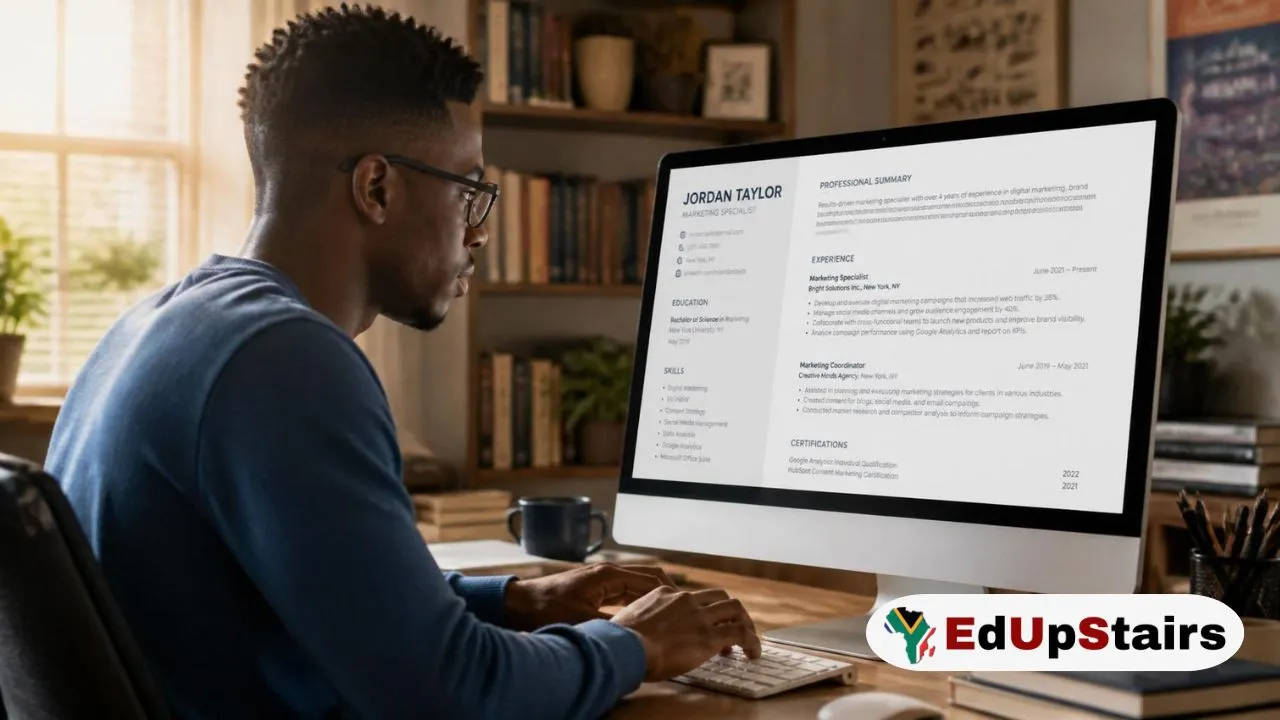

Finding a job is competitive, and your CV is often the first impression you make on an employer. One of the most common questions job seekers ask is: How many pages should a CV be?
Some people believe a CV should never be more than one page, while others think adding more pages makes them look more experienced. The truth is that there is no single rule that applies to everyone. The ideal CV length depends on your experience, qualifications, and the type of job you are applying for.
A well-written CV is not judged by how many pages it has but by how relevant, organised, and easy it is to read. Recruiters often spend less than a minute scanning a CV before deciding whether to continue reading or move on to the next candidate. This means every page must add value.
In this guide, we’ll explain how many pages your CV should be, when a one-page CV works best, when two pages are recommended, and when a three-page CV is acceptable. You’ll also discover practical tips to help you create a professional CV that improves your chances of landing interviews.
Why Does CV Length Matter?
Your CV is a marketing document. Its purpose is to convince an employer that you are worth inviting for an interview.
If your CV is too short, you may leave out important information that demonstrates your skills and achievements.
If your CV is too long, recruiters may struggle to find the information that matters most.
A good CV strikes the perfect balance by including enough information to showcase your abilities while remaining concise and easy to navigate.
Recruiters appreciate CVs that are:
- Easy to read
- Well structured
- Relevant to the advertised job
- Free from unnecessary information
- Professional in appearance
The General Rule: One to Two Pages
For most job seekers, one to two pages is the ideal CV length.
This gives you enough space to include:
- Personal details
- Professional summary
- Education
- Work experience
- Skills
- Certifications
- References (or simply state that they are available on request)
Most employers expect graduates and early-career professionals to submit a one or two-page CV.
When Should Your CV Be One Page?
A one-page CV is suitable if you are:
- A matriculant
- A university student
- A TVET College student
- Applying for internships
- Applying for learnerships
- Looking for your first job
- Applying for entry-level positions
- Have less than three years of work experience
A one-page CV forces you to focus only on your strongest qualifications.
Instead of filling space with unnecessary details, highlight your education, relevant skills, volunteer work, leadership activities, and any practical experience.
Benefits of a One-Page CV
- Quick to read
- Professional appearance
- Highlights your best information
- Ideal for recruiters reviewing hundreds of applications
- Shows that you can communicate effectively
When Is a Two-Page CV Better?
A two-page CV is considered the standard for many professionals.
If you have several years of experience, multiple qualifications, or specialised skills, limiting yourself to one page may mean leaving out valuable information.
A two-page CV works well if you have:
- Three or more years of experience
- Multiple employers
- Professional certifications
- Significant achievements
- Leadership experience
- Technical skills
- Relevant training courses
The second page should continue providing valuable information—not simply repeat details already mentioned.
Every section should support your application.
Is a Three-Page CV Ever Acceptable?
Yes—but only in certain situations.
A three-page CV may be appropriate if you are:
- A senior manager
- An executive
- A researcher
- An academic
- A medical professional
- An engineer with extensive project experience
- A specialist in your field
In these cases, employers often expect more detailed information about your career achievements, publications, projects, leadership roles, and professional memberships.
However, even experienced professionals should avoid making their CV longer than necessary.
Quality Is More Important Than Length
Many job seekers mistakenly believe that adding more information makes their CV stronger.
In reality, recruiters care about relevance—not volume.
Instead of asking:
“How can I make my CV longer?”
Ask yourself:
“Does this information help convince the employer that I’m the right person for this job?”
If the answer is no, leave it out.
What Recruiters Want to See
Recruiters generally look for:
- Relevant work experience
- Qualifications
- Technical skills
- Soft skills
- Career progression
- Achievements
- Clear formatting
- Correct spelling and grammar
They do not want to spend time reading unrelated information.
Information You Should Avoid
Many CVs become unnecessarily long because they include information employers rarely need.
Avoid including:
- Long personal profiles
- Primary school information
- Every short course you’ve ever attended
- Unrelated hobbies
- Copies of certificates inside the CV
- Irrelevant work experience from many years ago
- Full residential history
- Personal opinions
- Salary expectations (unless requested)
Keep your CV focused on the position you are applying for.
Tailor Your CV for Every Job
One mistake many applicants make is sending exactly the same CV for every vacancy.
Different employers look for different skills.
Before applying:
- Read the job advertisement carefully.
- Identify the required qualifications.
- Match your experience to the job requirements.
- Include keywords from the advertisement where appropriate.
- Remove irrelevant information.
Tailoring your CV can significantly improve your chances of passing both recruiter reviews and Applicant Tracking Systems (ATS).
Tips to Keep Your CV the Right Length
If your CV is becoming too long, consider these practical tips:
- Focus on your most recent work experience.
- Use bullet points instead of long paragraphs.
- Remove duplicated information.
- Keep descriptions concise.
- Include achievements rather than listing every duty.
- Use professional fonts and spacing.
- Avoid large images and unnecessary graphics.
- Keep formatting consistent throughout.
A clean, organised CV is often more effective than one packed with unnecessary detail.
Common CV Length Mistakes
Many applicants unintentionally reduce their chances by making these mistakes:
Trying to Fill Two Pages
Some people enlarge fonts, increase spacing, or add unnecessary sections simply to make their CV look longer.
Recruiters notice this immediately.
Including Every Job Ever Worked
Only include positions relevant to your current career goals.
Older or unrelated jobs can usually be summarised.
Writing Long Paragraphs
Large blocks of text discourage recruiters from reading.
Bullet points make information easier to scan.
Repeating Information
Avoid listing the same skills under multiple sections.
Each section should add something new.
CV Length Tips for South African Job Seekers
If you are applying for:
Learnerships
One page is usually enough.
Focus on:
- Education
- Skills
- Career objectives
- Volunteer work
Graduate Programmes
One to two pages.
Highlight:
- Qualifications
- Projects
- Leadership roles
- Practical training
Many government vacancies require additional application forms.
Your CV should remain clear and concise while including all relevant experience and qualifications requested in the advert.
Experienced Professionals
Two pages are usually ideal.
Only extend to three pages if your experience genuinely requires it.
Does a Longer CV Improve Your Chances?
No. Employers are not impressed by longer CVs.
They are impressed by relevant experience presented clearly.
A concise two-page CV filled with meaningful achievements is usually far more effective than a four-page CV containing unnecessary information.
Our Conclusion
There is no universal rule that says every CV must be one page or two pages. The best CV length depends on your level of experience and the role you are applying for.
For most South African job seekers, one or two pages is the ideal length. Focus on quality rather than quantity, tailor your CV for every application, and ensure every section helps demonstrate why you are the right candidate.
Remember, your CV is designed to secure an interview—not tell your entire life story. A well-structured, relevant, and professional CV will always outperform one that is unnecessarily long.
Edupstairs Advice
At Edupstairs, we recommend creating a CV that focuses on quality rather than length. Employers want relevant information presented in a professional, organised format. Before submitting any application, customise your CV to match the advertised position, proofread it carefully, and ensure it highlights your most valuable qualifications and achievements. A tailored CV will almost always perform better than a generic one.
Frequently Asked Questions
- Should a CV always be one page?
No. One page is ideal for students, graduates, and entry-level applicants, but experienced professionals often require two pages.
- Is a two-page CV acceptable?
Yes. In fact, two pages are considered the standard for many professional roles.
- Can I submit a three-page CV?
Yes, but only if your experience genuinely requires the additional space.
- Should I include all my work experience?
Only include experience that is relevant or demonstrates valuable skills for the position.
- Does font size affect CV length?
Yes. Use a readable font size between 10 and 12 points. Avoid shrinking text simply to fit more information onto a page.
Disclaimer
This article provides general career guidance and should not replace specific instructions provided by employers or recruitment agencies. Always follow the CV requirements stated in the job advertisement.