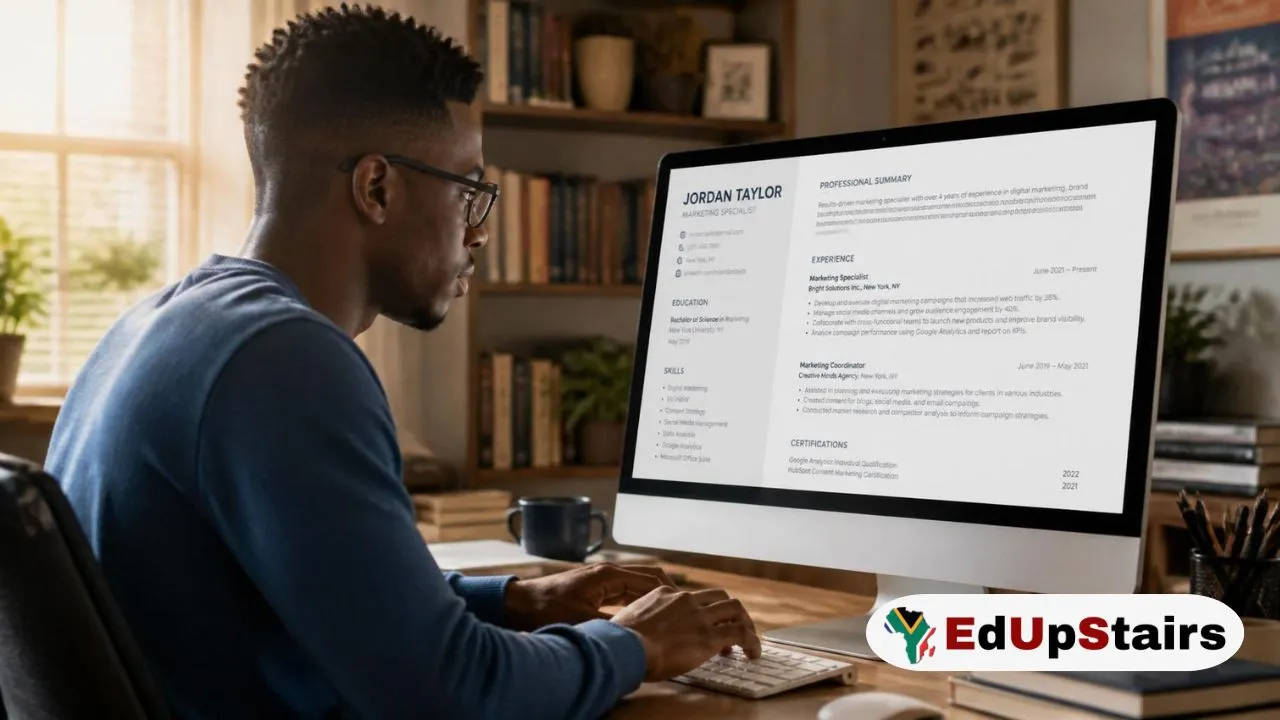

Your CV is often the very first impression an employer has of you. Before you get a chance to explain your skills, experience, or personality in an interview, your CV has already spoken on your behalf.
Unfortunately, many job seekers never realise that small mistakes on their CVs are preventing them from getting interviews. They keep applying for dozens—or even hundreds—of jobs without understanding why employers are not responding.
The truth is that most recruiters spend only a few seconds scanning each CV before deciding whether to continue reading or move on to the next applicant. This means even minor mistakes can have a major impact on your job search.
If you have been applying for jobs without receiving interview invitations, your CV could be the problem—not your qualifications.
In this guide, we’ll explore the most common CV mistakes that cost people interviews, explain why employers reject these applications, and show you how to improve your CV to increase your chances of getting shortlisted.
Why Your CV is Important More Than Ever
South Africa’s job market has become increasingly competitive. Many vacancies receive hundreds or even thousands of applications.
Recruiters simply do not have time to read every CV from beginning to end. Instead, they quickly look for candidates who appear organised, qualified, and suitable for the position.
Your CV needs to answer three questions almost immediately:
- Who are you?
- Can you do the job?
- Should the employer invite you for an interview?
If your CV fails to answer these questions quickly, it may never reach the interview stage.
Mistake 1: Using the Same CV for Every Job
One of the biggest mistakes applicants make is sending exactly the same CV for every vacancy.
Every employer looks for different skills, qualifications and experience. A CV designed for an administrative assistant position should not look identical to one submitted for a teaching, engineering or customer service role.
Instead:
- Read the job advertisement carefully.
- Adjust your professional summary.
- Highlight relevant experience.
- Match your skills to the vacancy.
- Include keywords used in the advert.
Tailoring your CV dramatically improves your chances of passing both recruiter screening and Applicant Tracking Systems (ATS).
Mistake 2: Spelling and Grammar Errors
Nothing creates a poor first impression faster than careless mistakes.
Examples include:
- Incorrect spelling
- Missing punctuation
- Wrong company names
- Incorrect job titles
- Poor sentence structure
Recruiters often view these mistakes as signs that the applicant lacks attention to detail.
Always:
- Proofread several times.
- Use spell-check software.
- Ask someone else to review your CV before sending it.
Mistake 3: Making Your CV Too Long
Many applicants believe that more information automatically makes their CV stronger.
In reality, recruiters prefer concise, relevant information.
Generally:
- Entry-level applicants: 1–2 pages
- Experienced professionals: 2–3 pages
Avoid filling your CV with unnecessary details such as:
- Primary school information
- Every short course you’ve ever attended
- Irrelevant part-time jobs from many years ago
- Long paragraphs describing simple tasks
Keep your CV focused on information that supports your application.
Mistake 4: Poor Formatting
A cluttered CV can be difficult to read.
Common formatting mistakes include:
- Multiple font styles
- Tiny text
- Bright colours
- Large blocks of text
- Inconsistent spacing
- Misaligned headings
A clean, professional layout makes it easier for recruiters to find important information quickly.
Use:
- Clear headings
- Bullet points
- Consistent fonts
- Adequate spacing
- Easy-to-read formatting
Mistake 5: No Professional Summary
Many applicants start their CV with personal information and then jump straight into education.
Instead, include a short professional summary.
Example:
Motivated Business Management graduate with excellent communication, administration and customer service skills. Passionate about learning, problem-solving and contributing to organisational success. Seeking an opportunity to develop professionally while delivering outstanding results.
This gives recruiters an immediate understanding of who you are.
Mistake 6: Listing Duties Instead of Achievements
Many CVs simply describe responsibilities.
For example:
- Answered phones.
- Filed documents.
- Assisted customers.
These tell employers what you were expected to do.
Instead, focus on achievements.
For example:
- Assisted over 80 customers daily while maintaining excellent service standards.
- Improved filing accuracy through better document organisation.
- Helped reduce customer waiting times by streamlining appointment scheduling.
Achievements demonstrate value.
Mistake 7: Including Irrelevant Information
Your CV does not need to tell your entire life story.
Avoid unnecessary information such as:
- Religious affiliation
- Political views
- Marital status (unless specifically requested)
- Number of children
- Height and weight
- Personal opinions
- Hobbies unrelated to the position
Only include information relevant to the job.
Mistake 8: Weak Skills Section
Many applicants write generic skills like:
- Hard worker
- Honest
- Good communication
- Team player
While these are positive qualities, employers prefer specific, measurable skills.
Examples include:
- Microsoft Excel
- Data capturing
- SAP
- Customer service
- Report writing
- Cash handling
- Classroom management
- Project coordination
- Typing (60 WPM)
- Canva
- Google Workspace
Specific skills help recruiters understand what you can actually do.
Mistake 9: Missing Keywords
Many employers now use Applicant Tracking Systems (ATS) to screen applications.
These systems search for keywords that match the job description.
If the advert mentions:
- Administration
- Customer service
- Data analysis
- Project management
Your CV should naturally include these terms where applicable.
Never copy the advert word-for-word, but ensure your genuine experience reflects relevant terminology.
Mistake 10: Using an Unprofessional Email Address
Email addresses such as:
- coolboy123@
- prettygirl99@
- soccerboss@
- kingoflife@
create an unprofessional impression.
Instead, use something simple: firstname.lastname@email.com
A professional email address immediately improves credibility.
Mistake 11: Outdated Contact Information
Some applicants forget to update:
- Phone numbers
- Email addresses
- Residential location
If recruiters cannot contact you, they cannot invite you for an interview.
Always double-check your contact details before submitting your CV.
Mistake 12: Including a Poor-Quality Photo
Unless specifically requested, you generally do not need to include a photo on your CV.
If you do include one:
- Use a professional headshot.
- Wear appropriate clothing.
- Use a neutral background.
- Avoid selfies.
- Avoid filters.
An unprofessional photo can distract from your qualifications.
Mistake 13: Not Explaining Employment Gaps
Employment gaps are common and not necessarily a problem.
If possible, briefly explain them through productive activities such as:
- Studying
- Volunteering
- Freelancing
- Caregiving
- Skills development
- Learnerships
Showing continuous development is better than leaving unexplained gaps.
Mistake 14: Copying Someone Else’s CV
Many job seekers download templates online and simply replace names.
Recruiters often recognise copied wording.
Your CV should reflect your genuine experience, skills and achievements.
Authenticity is always stronger than copying someone else’s content.
Mistake 15: Forgetting to Update Your CV
Some applicants continue using CVs that were created years ago.
Always update:
- Recent work experience
- New qualifications
- Certifications
- Skills
- Contact details
- References (if applicable)
Your CV should accurately represent your current career profile.
Extra Tips to Make Your CV Stand Out
To improve your chances of securing interviews:
- Tailor your CV for every application.
- Keep the design simple and professional.
- Use action verbs such as managed, developed, organised and implemented.
- Quantify achievements whenever possible.
- Save your CV as a PDF unless another format is requested.
- Use a professional filename such as Firstname_Surname_CV.pdf.
- Check spelling before submitting.
- Include only truthful information.
A Quick CV Checklist Before You Apply
Before sending your CV, ask yourself:
- Is my contact information correct?
- Have I customised it for this job?
- Are there any spelling mistakes?
- Is the formatting consistent?
- Does it highlight my achievements?
- Is it easy to read?
- Have I included relevant skills?
- Have I saved it as a PDF?
- Does it look professional?
- Would I invite myself for an interview after reading it?
If you can confidently answer “yes” to these questions, your CV is already stronger than many applications employers receive.
Edupstairs Advice
- A great CV does not guarantee an interview, but a poor CV can easily prevent you from getting one.
- Many job seekers assume they are being rejected because they lack qualifications, when in reality their CV is making it difficult for recruiters to recognise their potential.
- Take time to review your CV carefully before every application. Small improvements—such as correcting spelling mistakes, tailoring your content, highlighting achievements and improving formatting—can make a significant difference.
- Remember, your CV is your personal marketing document. Treat it as an investment in your future career rather than just another document to upload.
- The effort you put into creating a professional CV today could be the reason you receive your next interview invitation.
Frequently Asked Questions
- How many pages should a CV be?
Most entry-level candidates should aim for one to two pages, while experienced professionals may require two to three pages if all the information is relevant.
- Should I include references on my CV?
You may include references if requested by the employer. Otherwise, “References available upon request” is acceptable, although many employers no longer require this statement.
- Is a photo necessary?
Only include a photo if the employer specifically asks for one. For most South African job applications, it is optional.
- Should I customise my CV for every job?
Yes. Tailoring your CV to the job description significantly improves your chances of being shortlisted.
- Can I use AI to write my CV?
AI can help improve wording and structure, but your CV should always accurately reflect your own qualifications, experience and achievements.
- What file format should I use?
PDF is generally the safest option because it preserves formatting across different devices.
You can also:
- View latest Internships
- View latest Learnerships
- View Latest Bursaries
- View latest Government jobs
- View latest Company Vacancies
- View latest Municipality vacancies
- Visit the Edupstairs blog for daily updates
Disclaimer
This article is intended for general career guidance and educational purposes only. Recruitment practices vary between employers, industries and government departments. Always read the specific job advertisement carefully and follow the application instructions provided by the recruiting organisation.