
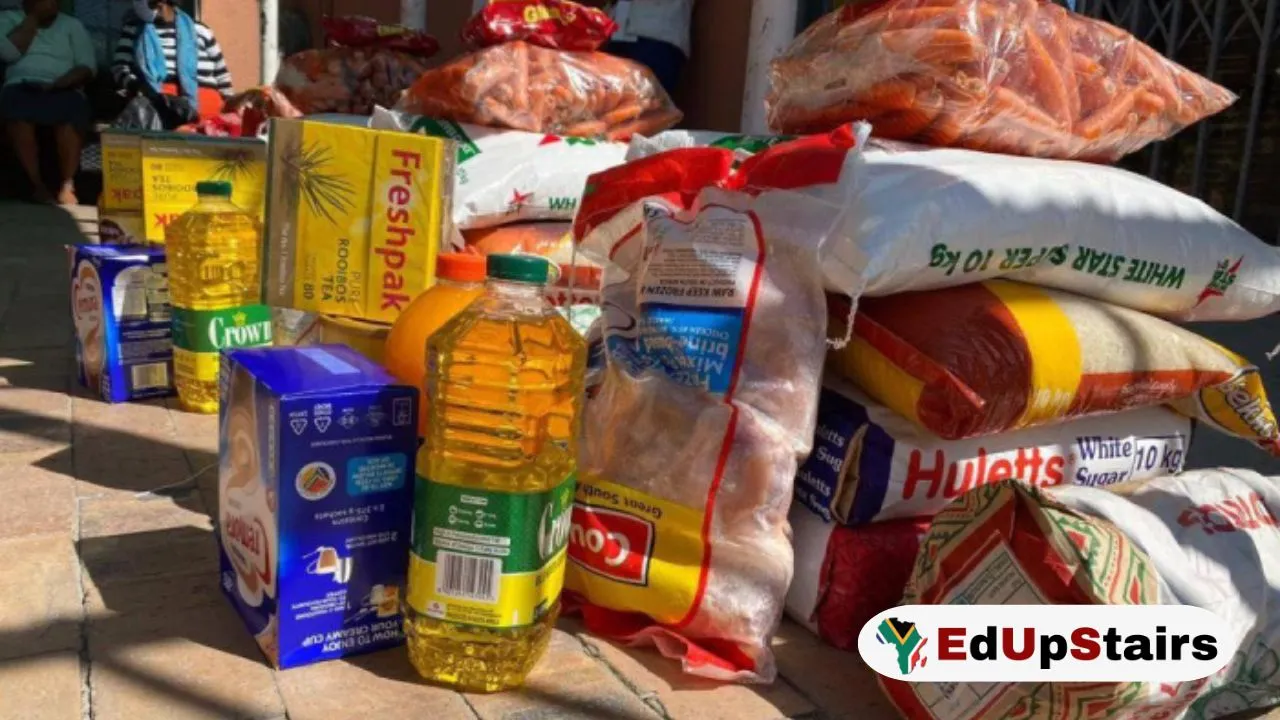

Food insecurity remains a reality for many South African households. Rising food prices, unemployment, and financial hardship have forced thousands of families to seek assistance from government departments, municipalities, churches, NGOs, and community organisations.
If you are struggling to put food on the table, you may qualify for emergency food assistance in the form of food parcels or food vouchers. However, many people are misled by social media posts claiming that “SASSA Food Parcel Applications Are Open.” These messages are often false and designed to scam vulnerable South Africans.
This guide explains how food parcel assistance actually works in South Africa, where to apply, who may qualify, and how to avoid scams.
Quick Overview
Opportunity: Emergency Food Parcel Assistance
Available Through:
- Municipalities
- Provincial Departments of Social Development
- Churches
- NGOs and Community Organisations
- Disaster Relief Programmes
Who May Qualify:
- Unemployed individuals
- Vulnerable households
- Elderly persons without support
- Child-headed households
- Families affected by disasters
- Persons with disabilities facing hardship
Application Cost: Free
Important Warning: SASSA does not have an ongoing national online food parcel application programme.
Is There Really a SASSA Food Parcel Programme?
One of the biggest myths circulating online is that there is a permanent “SASSA Food Parcel Application” programme where people can register online and receive food parcels every month.
This is not true.
Many websites, Facebook pages, WhatsApp messages, and TikTok videos claim that SASSA is distributing food parcels and asking people to submit personal information. In many cases, these are scams designed to collect personal details or generate website traffic.
While emergency food assistance may sometimes be coordinated with government departments during disasters or special interventions, there is currently no permanent nationwide online SASSA food parcel application system available to the public.
If someone asks you to:
- Pay money to receive a food parcel
- Submit banking details
- Click suspicious links
- Share OTP codes
- Download unknown applications
You should be extremely cautious.
Remember:
Legitimate food assistance programmes do not require payment.
Who Provides Food Parcels in South Africa?
Food parcel assistance is generally provided by several different organisations rather than a single national programme.
These include:
Municipalities
Many local municipalities provide emergency food relief to vulnerable households.
Municipal social workers often assess applications and determine whether assistance is needed.
Support may include:
- Food parcels
- Food vouchers
- Temporary relief assistance
- Referrals to community organisations
Provincial Departments of Social Development
Each province has a Department of Social Development that assists vulnerable individuals and families.
These departments may provide:
- Social relief programmes
- Food assistance
- Emergency interventions
- Disaster relief support
Applications are usually assessed by social workers.
Churches and Faith-Based Organisations
Many churches provide food parcels to community members regardless of religious affiliation.
Examples include:
- Local church outreach programmes
- Community feeding schemes
- Faith-based charities
- Emergency food banks
Churches often assist households facing temporary financial difficulties.
Non-Governmental Organisations (NGOs)
Many NGOs provide food support across South Africa.
Examples include:
- Community food banks
- Feeding schemes
- Poverty alleviation organisations
- Disaster response groups
Availability varies depending on funding and community needs.
Community-Based Organisations
Many townships and local communities have organisations that assist residents with:
- Food parcels
- Soup kitchens
- Food gardens
- Nutritional support programmes
These organisations often work closely with social workers and local leaders.
Who Qualifies for Food Parcel Assistance?
Requirements differ from one organisation to another.
However, assistance is generally targeted at people experiencing genuine hardship.
Priority may be given to:
- Unemployed individuals
- Families with no income
- Elderly persons living alone
- Child-headed households
- Persons with disabilities
- Households affected by fire, floods, or disasters
- Families awaiting social grant approval
- Vulnerable women and children
Being unemployed does not automatically guarantee approval, as assistance is often based on available resources and community assessments.
How to Apply for Food Parcels in Your Area
Step 1: Visit Your Local Social Development Office
The first place to seek assistance is your nearest Department of Social Development office.
Officials can:
- Assess your situation
- Explain available programmes
- Refer you to local food assistance initiatives
- Arrange social worker assessments where necessary
Step 2: Contact Your Municipality
Many municipalities have social development units that assist vulnerable residents.
Ask whether they offer:
- Food parcel programmes
- Emergency relief assistance
- Community support services
Bring identification and any documents that demonstrate your circumstances.
Step 3: Speak to a Social Worker
Social workers play an important role in determining eligibility for emergency assistance.
A social worker may:
- Conduct an assessment
- Verify household circumstances
- Recommend food assistance
- Refer you to additional support services
Step 4: Approach Local Churches and NGOs
Many churches and NGOs provide assistance more quickly than formal government programmes.
Visit organisations in your community and ask about:
- Food parcels
- Feeding schemes
- Food vouchers
- Community kitchens
Step 5: Check Community Notice Boards
Food assistance programmes are often advertised through:
- Municipal offices
- Libraries
- Clinics
- Community halls
- Local radio stations
- Community Facebook groups
Keep an eye on local announcements.
Documents You May Need
Although requirements vary, you may be asked to provide:
- South African ID document
- Proof of residence
- SASSA grant documents (if applicable)
- Proof of unemployment
- Affidavit confirming financial hardship
- Birth certificates for dependent children
Not every organisation requires all these documents.
What Is Social Relief of Distress?
Many South Africans confuse food parcels with Social Relief of Distress (SRD).
Social Relief of Distress refers to temporary assistance provided to individuals and families facing extreme hardship.
This support can sometimes include:
- Food parcels
- Food vouchers
- Temporary material assistance
Applications are assessed individually based on need.
Warning Signs of Food Parcel Scams
Unfortunately, scammers often target unemployed people and grant beneficiaries.
Watch out for these red flags:
- Requests for Payment
No legitimate food parcel programme should charge an application fee.
- Fake Facebook Pages
Scammers often create pages using government logos and official-looking names.
Always verify information through official government channels.
- WhatsApp Messages Promising Guaranteed Food Parcels
Messages claiming:
- “Apply now before midnight”
- “Limited food parcel slots available”
- “Click here to claim”
are often fraudulent.
- Requests for Banking Details
Food parcel applications generally do not require banking information.
- Suspicious Websites
Be cautious of websites promising instant approval without any assessment process.
- Alternative Sources of Food Support
If food parcel assistance is unavailable, consider:
- Community soup kitchens
- School nutrition programmes
- Food banks
- Church feeding schemes
- Community food gardens
- NGO support programmes
Many organisations provide ongoing assistance to vulnerable households.
Why It Is Important to Seek Help Early
Many families wait until they have completely run out of food before seeking assistance.
If you are facing financial hardship:
- Contact social services early
- Speak to community organisations
- Explore available support programmes
- Ask for referrals from social workers
Seeking assistance early may help prevent a crisis from becoming worse.
Edupstairs Advice
If you need food assistance, start with your nearest Department of Social Development office, municipality, or trusted community organisation. Avoid websites and social media pages promising guaranteed SASSA food parcels in exchange for personal information or payments.
Always verify information through official government channels and remember that genuine assistance programmes are free. If something sounds too good to be true, it probably is.
Frequently Asked Questions
- Does SASSA offer food parcels?
There is no permanent nationwide online SASSA food parcel application programme. Be careful of online scams claiming otherwise.
- Can unemployed people apply for food parcels?
Yes. Many food assistance programmes prioritise unemployed and vulnerable households.
- Do I need to pay to apply?
No. Legitimate food parcel programmes are free.
- Where can I apply?
You can apply through local municipalities, social development offices, churches, NGOs, and community organisations.
- How long does approval take?
This depends on the organisation and the availability of resources.
You can also:
- View latest Internships
- View latest Learnerships
- View Latest Bursaries
- View latest Government jobs
- View latest Company Vacancies
- View latest Municipality vacancies
- Visit the Edupstairs blog for daily updates
Disclaimer
This article is for informational purposes only. Food parcel programmes, eligibility requirements, and availability may vary by province, municipality, organisation, and funding availability. Applicants should verify information directly with official government departments and recognised community organisations.
EDUPSTAIRS IS A REGISTERED NON-PROFIT ORGANISATION NPO No: 232 – 182, PUBLIC BENEFIT ORGANISATION (PBO): 930066984. EDUPSTAIRS DOES NOT, IN ANY WAY OR FORM, SOLICIT MONEY OR CV’S FROM PEOPLE FOR JOBS. PLEASE BE AWARE OF PHONY JOB POSTINGS AND RECRUITMENT FRAUD. USE THE EDUPSTAIRS SCAM DETECTOR TOOL TO SPOT A SCAM BEFORE YOU APPLY




Am interested in food
Hi I’m bisisiwe Mndebele.i live in Mpumalanga at Mhluzi.i need food passels
I’m interested in food parcel as I’m as in need assistance at home and not working