South Africa continues to face a shortage of qualified artisans, making apprenticeship opportunities some of the most valuable career pathways available to young people interested in engineering and technical trades. If you have recently completed Grade 12 and are looking for a practical career where you earn valuable workplace experience while working towards a nationally recognised trade qualification, the Steinmüller Africa Boilermaking and Welding Artisan Apprenticeship Programme 2026 is an opportunity worth considering.
Unlike many graduate programmes that require tertiary qualifications, this apprenticeship is designed to develop future artisans from the ground up through structured technical training, practical workplace learning, mentorship and trade test preparation.
This article breaks down everything applicants need to know, including the official requirements, what the apprenticeship involves, how to prepare your application and what career opportunities become available after qualifying.
Quick Overview
- Programme: Boilermaking and Welding Artisan Apprenticeship Programme 2026
- Company: Steinmüller Africa
- Industry: Mechanical and Industrial Engineering
- Programme Duration: Minimum 36 months
- Location: Mpumalanga (Power Station Operations)
- Experience Required: No experience required
- Minimum Qualification: Grade 12
- Age Requirement: 35 years or younger
- Employment Status: Must be unemployed
- Closing Date: Not specified by Steinmüller Africa
Trade Qualification:
About Steinmüller Africa
Steinmüller Africa is one of South Africa’s leading engineering companies specialising in heavy industrial maintenance, fabrication, boiler construction, welding, pressure equipment and engineering services.
The company has decades of experience supporting large industrial facilities, particularly within South Africa’s power generation sector. Its teams regularly work on complex engineering projects involving boilers, piping systems, pressure vessels, maintenance shutdowns and heavy mechanical equipment.
Because the work requires highly skilled artisans, Steinmüller Africa continues investing in apprenticeship programmes that develop the next generation of qualified boilermakers and welders.
Completing an apprenticeship with an established engineering company gives apprentices exposure to real industrial environments rather than only classroom-based learning.
Official Programme Purpose
According to Steinmüller Africa, the apprenticeship is a recognised technical training programme that combines:
- Theoretical learning
- Practical training
- Workplace experience
These three components are completed over a structured training period before apprentices attempt their national Trade Test.
Successful candidates who pass the Trade Test will qualify as artisans in:
- Boilermaking
- Welding
Official Minimum Requirements
The following information comes directly from Steinmüller Africa.
Applicants should have:
- Grade 12
- English
- Mathematics or Technical Mathematics (Mathematics Literacy is not accepted)
- Physical Science or Technical Science
- Minimum 50% pass mark
- Engineering Graphics and Design (advantageous)
- Be physically and medically fit
- Clear criminal record
- Be unemployed
- Be 35 years or younger
- Proof of residence (municipal account)
Applicants must also:
- Live within a 50 km radius of one of the following power stations:
- Arnot
- Camden
- Duvha
- Hendrina
- Kendal
- Kriel
- Kusile
- Majuba
If you do not currently live in Bethal or nearby areas, you must be willing to relocate at your own expense.
What Was Not Specified
To maintain editorial accuracy, it is important to note that Steinmüller Africa did not specify:
- Monthly apprenticeship stipend
- Salary
- Number of available positions
- Closing date
- Start date
- Working hours
- Leave benefits
- Medical aid
- Pension benefits
Applicants should therefore rely only on information published in the official vacancy advertisement.
What Will Apprentices Learn?
Over the minimum 36-month training period, apprentices will gradually develop practical engineering skills.
Training includes:
Theoretical Knowledge
You will study:
- Engineering principles
- Workshop calculations
- Safety procedures
- Fabrication methods
- Welding processes
- Materials science
- Technical drawings
Practical Training
Practical learning typically involves:
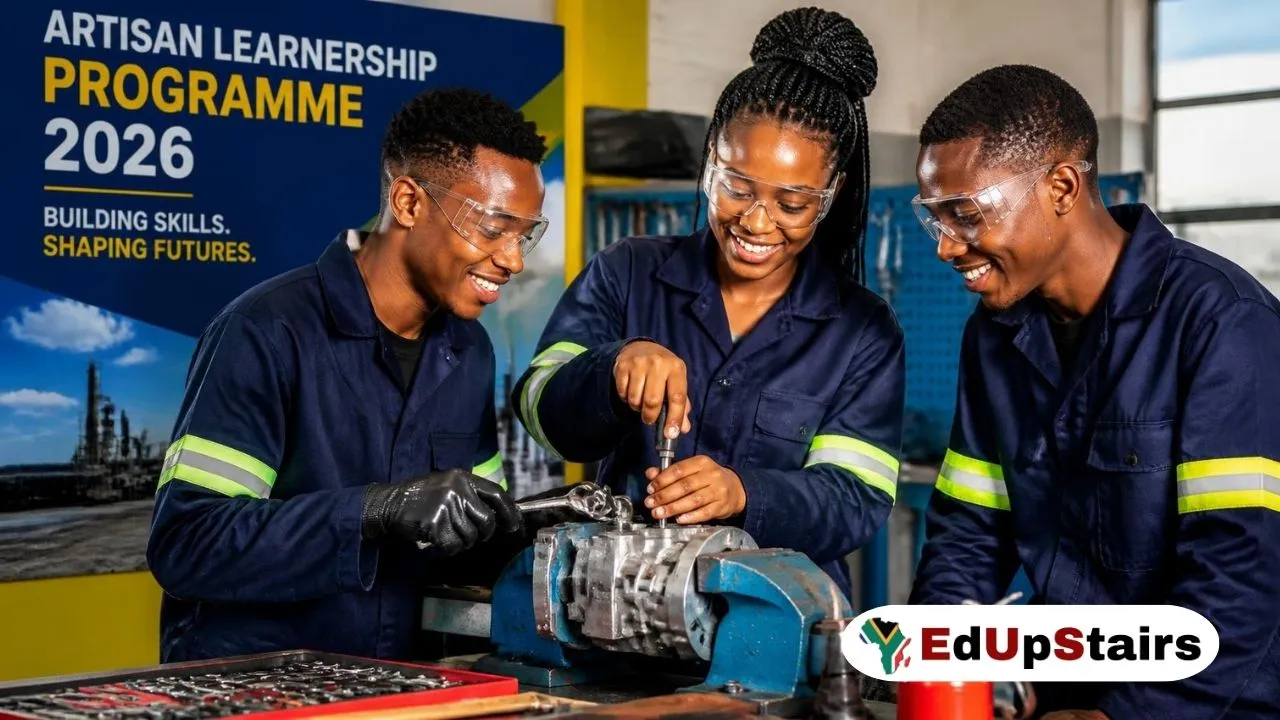
- Using engineering tools
- Measuring equipment
- Fabrication techniques
- Welding practice
- Cutting steel
- Grinding
- Fitting components
- Reading engineering drawings
Workplace Experience
One of the biggest advantages of an apprenticeship is learning on real industrial sites.
Apprentices gain exposure to:
- Shutdown maintenance
- Industrial boilers
- Heavy engineering equipment
- Steel structures
- Pressure vessels
- Mechanical repairs
- Safety systems
Official Key Performance Areas
During the apprenticeship, candidates will:
- Complete prescribed knowledge modules
- Complete practical training modules
- Gain workplace experience
- Complete assigned workplace tasks
- Receive guidance from mentors
- Support production and site activities
- Prepare for the Trade Test
- Complete other engineering duties when required
After successfully passing the Trade Test, apprentices become qualified artisans.
Personal Skills Steinmüller Africa Is Looking For
Besides technical ability, the company is looking for applicants who demonstrate:
- Attention to detail
- Teamwork
- Self-motivation
- Task orientation
These qualities are essential because engineering work often involves working safely, accurately and collaboratively.
Understanding the Trades
Boilermaking
Boilermakers manufacture, install and repair:
- Boilers
- Pressure vessels
- Steel structures
- Heavy industrial equipment
- Pipelines
The trade combines fabrication, fitting and engineering drawing interpretation.
Welding
Welders permanently join metal components using specialised welding techniques.
Professional welders work in industries such as:
- Mining
- Manufacturing
- Petrochemical
- Construction
- Shipbuilding
- Power generation
High-quality welders remain in demand across South Africa and internationally.
Why Engineering Graphics and Design Helps
Although Engineering Graphics and Design (EGD) is only listed as advantageous, it can strengthen your application because it develops skills such as:
- Reading technical drawings
- Visualising engineering components
- Measurement
- Mechanical design concepts
These skills are directly relevant to both boilermaking and welding.
Why Mathematics is Important
Some learners are surprised that Mathematics Literacy is not accepted.
This is because artisans regularly use mathematics when:
- Measuring components
- Calculating angles
- Reading drawings
- Working with tolerances
- Estimating materials
Technical Mathematics also meets the programme requirements.
Living Within the Required Area
- Applicants must reside within a 50 km radius of the specified power stations.
- This requirement exists because apprentices often work on nearby maintenance projects.
- Steinmüller Africa has also stated that accommodation and transport will not be provided.
- Applicants should therefore consider travel costs before applying.
How to Apply
According to the official vacancy information:
- Apply through the official Steinmüller Africa recruitment portal
- Ensure you meet all minimum requirements before submitting your application.
- Prepare all supporting documents requested.
- Submit your application before the official closing date once confirmed.
If the official recruitment portal requests additional documentation, ensure that all uploads are clear, complete and submitted before the deadline.
Edupstairs Application Guidance
The following guidance is provided independently by Edupstairs to help applicants submit stronger applications. It does not form part of Steinmüller Africa’s official requirements.
Before applying:
- Update your CV.
- Ensure your contact details are correct.
- Include all Grade 12 subjects and results.
- Highlight any Engineering Graphics and Design achievements.
- Mention technical hobbies or projects if relevant.
- Prepare certified copies of your ID and Matric certificate if requested.
- Keep proof of residence ready.
If shortlisted, prepare to discuss:
- Why you chose engineering.
- Why you want to become an artisan.
- What you know about workplace safety.
- Your willingness to relocate if required.
Create a Job Specific ATS CV and a Cover Letter Here
Understanding N2, N3, N4 and Trade Test Requirements in South Africa
Artisan Trades Explained: Which Trade Is Right for You?
Apprenticeship / Artisan Supporting Documents Checklist in South Africa
Interview Questions and Answers for Apprenticeship / Artisan Jobs in South Africa: A Complete Guide
How to Write a Winning Motivational Letter for an Apprenticeship / Artisan Job in South Africa
How to Write a Winning CV for Apprenticeship / Artisan Job Applications in South Africa
Common Application Mistakes
Avoid these common mistakes:
- Applying with Mathematics Literacy.
- Forgetting proof of residence.
- Submitting an outdated CV.
- Leaving contact details incomplete.
- Ignoring the residency requirement.
- Applying despite living outside the required radius without indicating willingness to relocate.
- Uploading unclear documents.
Career Opportunities After Qualification
Qualified artisans are employed across numerous sectors.
Possible employers include:
- Power stations
- Engineering contractors
- Manufacturing companies
- Mining companies
- Petrochemical plants
- Steel fabrication companies
- Maintenance contractors
Many artisans also become:
- Supervisors
- Foremen
- Inspectors
- Workshop managers
- Quality controllers
- Entrepreneurial welding specialists
Tools you may find useful:
- SETA Platform
- RDP / BNG Housing Eligibility Checker
- SASSA Grant Eligibility Checker
- SAPS / Metro / Traffic / DCS Eligibility Checker
- Youth Employment Eligibility Checker
- SA Bursary & NSFAS Eligibility Checker
- UIF Benefits Eligibility Checker and Payment Estimator
View Other Employment Opportunities here
Need Help?
Edupstairs Advice
Artisan apprenticeships remain among the strongest career pathways for young South Africans who enjoy practical work and want to build long-term careers in engineering. The Steinmüller Africa Boilermaking and Welding Artisan Apprenticeship Programme provides structured technical training, workplace experience and the opportunity to qualify through a recognised Trade Test.
If you meet the academic requirements—particularly in Mathematics or Technical Mathematics and Physical Science—take time to prepare a professional application. Even without previous work experience, demonstrating reliability, attention to detail and a genuine interest in engineering can make your application more competitive.
Frequently Asked Questions (FAQs)
-
Do I need previous work experience?
No. The official advertisement states that no previous experience is required.
-
How long is the apprenticeship?
A minimum of 36 months.
-
Which trades are offered?
Boilermaking and Welding.
-
Will I become a qualified artisan?
Yes, provided you successfully complete the programme and pass the Trade Test.
-
Is Mathematics Literacy accepted?
No. Applicants must have Mathematics or Technical Mathematics.
-
Is Physical Science required?
Yes. Applicants need Physical Science or Technical Science with at least a 50% pass mark.
-
Does Steinmüller Africa provide accommodation?
No. The company specifically states that accommodation and transport will not be provided.
-
Is there an age limit?
Yes. Applicants must be unemployed and 35 years of age or younger.
-
Can applicants from outside Mpumalanga apply?
Applicants must reside within a 50 km radius of the specified power stations. Those who do not already live locally must be willing to relocate to Bethal or surrounding areas at their own cost.
-
Has the stipend been announced?
No. The official advertisement does not specify whether a stipend or salary will be paid.
You can also:
- View latest Internships
- View latest Learnerships
- View Latest Bursaries
- View latest Government jobs
- View latest Company Vacancies
- View latest Municipality vacancies
- Visit the Edupstairs blog for daily updates
Application Outcome Tracker (anonymous)
No names collected. This helps future applicants understand real-world timelines.
Have you applied for this opportunity?
Disclaimer
This article is an independent opportunity explainer published by Edupstairs to help applicants better understand the Steinmüller Africa Boilermaking and Welding Artisan Apprenticeship Programme 2026. While every effort has been made to ensure accuracy, applicants should always verify information through the official Steinmüller Africa recruitment channels before submitting an application.
Editorial Integrity
Edupstairs independently explains employment, apprenticeship, internship and learnership opportunities using information published by official employers and institutions. Official programme requirements have been clearly separated from Edupstairs’ independent application guidance. Where details such as stipend, closing date or benefits were not specified by Steinmüller Africa, this article explicitly states that the information was not provided rather than making assumptions.
EDUPSTAIRS IS A REGISTERED NON-PROFIT ORGANISATION NPO No: 232 – 182, PUBLIC BENEFIT ORGANISATION (PBO): 930066984. EDUPSTAIRS DOES NOT, IN ANY WAY OR FORM, SOLICIT MONEY OR CV’S FROM PEOPLE FOR JOBS. PLEASE BE AWARE OF PHONY JOB POSTINGS AND RECRUITMENT FRAUD. USE THE EDUPSTAIRS SCAM DETECTOR TOOL TO SPOT A SCAM BEFORE YOU APPLY