
Every year, we see the same heartbreaking comments on social media.
“I’ve been unemployed for three years.”
“I’ve applied for over 500 jobs.”
“No one ever told me about this learnership.”
“Where do people even find these opportunities?”
The truth is that thousands of opportunities never reach the people who need them most. Many South Africans know what a learnership is, but very few understand the organisations that actually make many of these opportunities possible.
Those organisations are called SETAs.
If you’ve been searching for learnerships, internships, bursaries, apprenticeships, Work Integrated Learning (WIL) opportunities or graduate programmes, understanding how SETAs work could completely change your job search in 2026.
Even better, you no longer have to visit 21 different SETA websites individually.
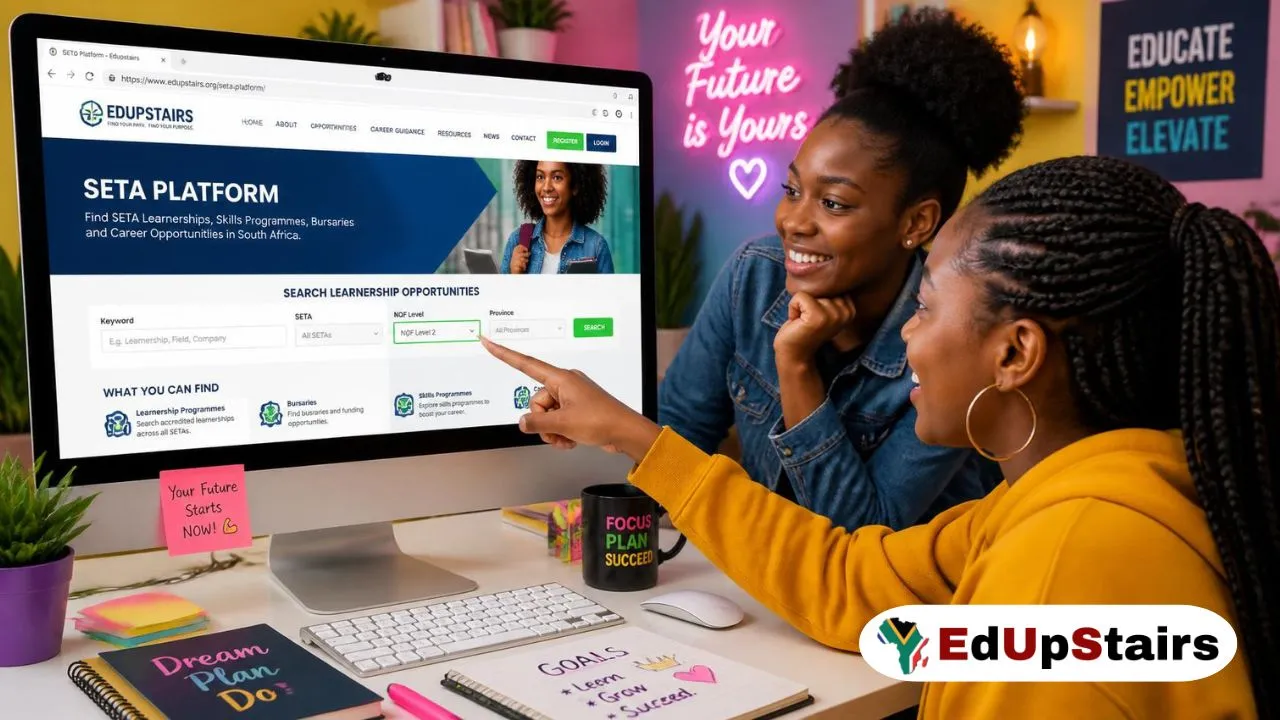
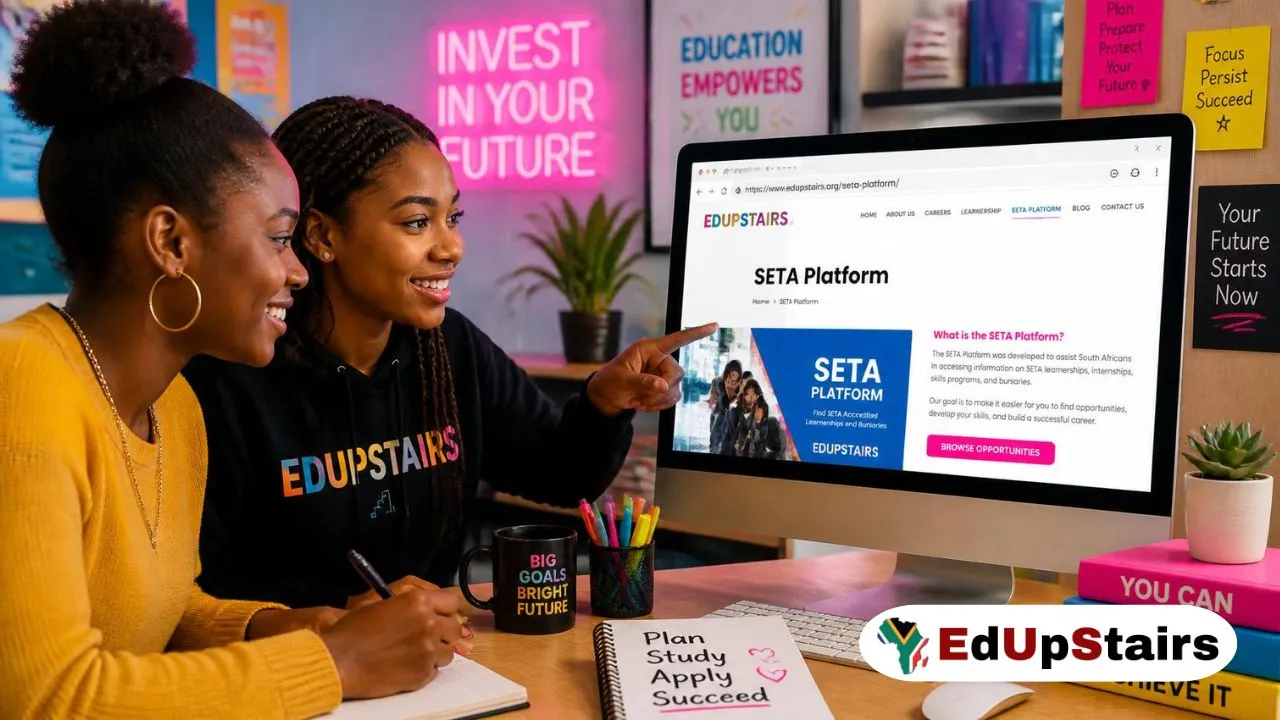
The new Edupstairs SETA Platform brings South Africa’s SETAs together in one place, helping you discover programmes, understand eligibility requirements and explore career pathways based on your qualifications.
If you have never heard of a SETA before—or you’ve heard the name but never understood what they actually do—this guide is for you.
Quick Overview
- SETA stands for Sector Education and Training Authority
- South Africa has 21 SETAs
- Every SETA focuses on a specific industry
- SETAs fund and support:
- Learnerships
- Internships
- Apprenticeships
- Work Integrated Learning (WIL)
- Skills Programmes
- Bursaries
- Graduate Programmes
- Artisan Development
- Many employers partner with SETAs to recruit young people
- The Edupstairs SETA Platform allows you to explore SETAs in one place instead of searching multiple websites
What Exactly is a SETA?
A Sector Education and Training Authority (SETA) is an organisation established by the South African government to develop skills within specific industries.
Think of a SETA as a bridge between:
- Education
- Employers
- Job seekers
- Skills development
- Economic growth
Their goal is simple:
Help South Africans gain the skills employers actually need.
Instead of every company training people independently, industries work together through SETAs to improve the country’s workforce.
That is why so many learnerships and internships are linked to SETAs.
Why Were SETAs Created?
South Africa has long faced two major challenges:
- High unemployment
- Skills shortages
Many companies struggle to find suitably skilled employees while millions of South Africans struggle to find work.
SETAs were created to help close this gap by:
- Funding workplace training
- Developing industry skills
- Supporting unemployed youth
- Improving employability
- Helping businesses train employees
- Supporting economic growth
Simply put:
SETAs exist to help South Africans become employable.
What Opportunities Do SETAs Offer?
One of the biggest misconceptions is that SETAs only offer learnerships.
In reality, they support a wide range of career development opportunities.
These include:
Learnerships
Learnerships combine classroom learning with practical workplace experience.
Participants receive:
- Accredited training
- Practical experience
- Monthly stipend (where applicable)
- National qualification upon successful completion
Internships
Many SETAs partner with government departments, municipalities and private companies to fund internships for graduates.
These help graduates gain the work experience employers require.
Apprenticeships
If you’re interested in becoming an artisan, apprenticeships are often supported through SETAs.
Common artisan fields include:
- Electrician
- Welder
- Plumber
- Boilermaker
- Fitter
- Diesel Mechanic
- Millwright
Work Integrated Learning (WIL)
TVET students often need workplace experience before completing their qualifications.
Many SETAs support WIL placements through employer partnerships.
Bursaries
Several SETAs provide bursaries for scarce and critical skills.
These may cover:
- Tuition
- Books
- Accommodation
- Living expenses
Skills Programmes
Short courses remain one of the fastest ways to improve employability.
SETAs regularly support accredited skills programmes in industries facing shortages.
Graduate Programmes
Many employers receive SETA support to train graduates through structured graduate development programmes.
The 21 SETAs in South Africa
Each SETA focuses on a different sector of the economy.
Examples include:
- AGRISETA
- BANKSETA
- CATHSSETA
- CHIETA
- CETA
- EWSETA
- ETDP SETA
- FASSET
- FOODBEV SETA
- FP&M SETA
- HWSETA
- INSETA
- LGSETA
- MERSETA
- MICT SETA
- PSETA
- SASSETA
- SERVICES SETA
- TETA
- W&RSETA
- QCTO-related occupational pathways
Each industry has different:
- Qualifications
- Learnerships
- Career paths
- Skills shortages
- Funding opportunities
Why Many People Never Hear About These Opportunities
One question I hear all the time is:
“Why didn’t I know about this?”
The answer is surprisingly simple.
Many opportunities are published only on:
- Individual SETA websites
- Company career pages
- Government portals
- University notice boards
- TVET College platforms
That means job seekers often need to search dozens of websites every week.
It becomes overwhelming.
Many people eventually give up.
Introducing the Edupstairs SETA Platform
This is exactly why we created the Edupstairs SETA Platform.
Instead of asking people to search 21 different SETA websites, we wanted one place where anyone could start exploring opportunities.
The platform is designed to help South Africans understand:
- Which SETA is relevant to them
- What programmes each SETA offers
- Which qualifications are accepted
- Career pathways linked to each sector
- NQF levels
- Learnership opportunities
- Internship opportunities
- Apprenticeship opportunities
- Graduate programmes
- WIL opportunities
- Skills programmes
- Bursary opportunities
Rather than simply listing vacancies, the platform helps you understand the entire skills development ecosystem.
Our goal is to make SETAs easier to understand, especially for first-time job seekers, TVET students, matriculants and graduates.
Find Opportunities Based on Your Qualification
One of the biggest problems young people face is not knowing where they fit.
For example:
If you have Grade 9
You can explore occupational programmes and entry-level pathways available within certain sectors.
If you have Matric
You’ll discover:
- Learnerships
- Skills programmes
- Apprenticeships
- Entry-level industry pathways
If you have an N4–N6 Qualification
You can explore:
- WIL opportunities
- In-service training
- Internships
- Learnerships
If you have a Diploma
The platform helps you discover graduate internships, professional development programmes and sector-specific opportunities.
If you have a Degree
You can explore graduate development programmes, internships, bursaries for postgraduate studies and specialised career pathways.
Understand NQF Levels Without the Confusion
Many opportunity adverts mention:
- NQF Level 2
- NQF Level 4
- NQF Level 5
- NQF Level 6
Yet many applicants don’t know what these actually mean.
The Edupstairs SETA Platform explains:
- Every NQF level
- Which qualifications match each level
- Which SETAs offer programmes at those levels
- Typical career progression
This makes it easier to apply for opportunities you genuinely qualify for.
Discover Career Pathways
Another feature we wanted to improve is career planning.
Many young people ask:
“What comes after this learnership?”
Instead of seeing a single opportunity, the platform helps you understand where it can lead.
For example:
Learnership → Internship → Employment → Further Qualification → Professional Career
Understanding these pathways helps you make better long-term decisions rather than applying randomly.
Tips to Increase Your Chances of Success
Finding opportunities is only part of the journey.
To improve your chances of being selected:
- Keep your CV updated.
- Prepare certified copies of your documents when required.
- Read the eligibility criteria carefully.
- Apply before the closing date.
- Tailor your application to the opportunity.
- Check opportunities regularly.
- Keep your contact details current.
- Respond quickly if contacted.
Consistency often makes the difference.
Common Mistakes Applicants Make
Avoid these common errors:
- Applying without reading the requirements.
- Using an outdated CV.
- Ignoring closing dates.
- Applying for programmes they don’t qualify for.
- Not checking multiple sectors.
- Waiting only for government opportunities.
- Giving up after a few unsuccessful applications.
Successful applicants usually apply consistently over time rather than relying on a single opportunity.
Create a Job Specific ATS CV and a Cover Letter Here
Why SETAs Matter More Than Ever in 2026
South Africa continues to prioritise skills development as industries evolve through digital transformation, infrastructure investment, manufacturing, healthcare, renewable energy and other growth sectors.
As employers increasingly seek practical experience alongside academic qualifications, SETAs remain an important part of connecting education with the workplace. Whether you’re leaving school, graduating from a TVET College, completing university or looking to reskill, SETA-supported programmes can help you build experience that improves your employability.
Official Information vs Edupstairs Guidance
Official Information
The information about individual programmes, eligibility criteria, application dates, funding availability and closing dates always comes from the relevant SETA, employer, government department or training provider.
Applicants should always read the official advertisement before applying.
Edupstairs Guidance
The Edupstairs SETA Platform independently explains:
- How each SETA works
- Programme types
- Qualification pathways
- NQF levels
- Career planning
- Application tips
- Industry insights
Our aim is to simplify complex information so that more South Africans can make informed decisions about their education and careers.
Tools you may find useful:
- SETA Platform
- RDP / BNG Housing Eligibility Checker
- SASSA Grant Eligibility Checker
- SAPS / Metro / Traffic / DCS Eligibility Checker
- Youth Employment Eligibility Checker
- SA Bursary & NSFAS Eligibility Checker
- UIF Benefits Eligibility Checker and Payment Estimator
View Other Employment Opportunities here
Need Help?
Edupstairs Advice
If you’ve been applying for jobs without success, don’t limit yourself to job advertisements alone. Many careers begin with skills development opportunities such as learnerships, internships, apprenticeships and Work Integrated Learning programmes. Spend time understanding which SETA aligns with your field of interest and use that knowledge to build a long-term career strategy rather than chasing isolated vacancies.
The Edupstairs SETA Platform was created with exactly this purpose in mind—to simplify South Africa’s skills development landscape and help every job seeker, student and graduate understand where they fit. Instead of wondering where to start, you can explore industries, qualifications, programmes and career pathways in one place, giving yourself a better chance of discovering opportunities that match your goals.
Frequently Asked Questions
-
What does SETA stand for?
SETA stands for Sector Education and Training Authority.
-
How many SETAs are there in South Africa?
There are 21 SETAs, each responsible for a different economic sector.
-
Do SETAs only offer learnerships?
No. They also support internships, apprenticeships, bursaries, WIL placements, graduate programmes and skills programmes.
-
Can unemployed youth apply?
Yes. Many SETA-supported programmes are specifically designed for unemployed South Africans, although eligibility varies by programme.
-
Are SETA programmes free?
Many programmes are funded, while others may involve partnerships with employers or training providers. Always check the official requirements for the specific opportunity.
-
Do I need Matric?
Not always. Some opportunities require Matric, while others accept lower or higher qualification levels depending on the programme.
-
Can graduates benefit from SETAs?
Yes. Many SETAs support graduate internships, workplace experience and professional development programmes.
-
Where can I find SETA opportunities?
You can explore opportunities through official SETA websites, employer career pages and the Edupstairs SETA Platform, which brings information about all 21 SETAs together in one place.
You can also:
- View latest Internships
- View latest Learnerships
- View Latest Bursaries
- View latest Government jobs
- View latest Company Vacancies
- View latest Municipality vacancies
- Visit the Edupstairs blog for daily updates
Disclaimer
This article is intended for educational and informational purposes only. Programme availability, eligibility requirements, funding arrangements and application processes vary between SETAs and participating organisations. Applicants should always verify details using the official advertisement before submitting an application.
Editorial Integrity
This article has been independently prepared by Edupstairs to explain how South Africa’s SETA system works and how it can help job seekers access skills development opportunities. While official information is used as the foundation for understanding SETAs and their programmes, the guidance, career insights and practical application advice are Edupstairs’ own editorial content. We do not represent any SETA or government department, and we do not guarantee selection into any programme.
EDUPSTAIRS IS A REGISTERED NON-PROFIT ORGANISATION NPO No: 232 – 182, PUBLIC BENEFIT ORGANISATION (PBO): 930066984. EDUPSTAIRS DOES NOT, IN ANY WAY OR FORM, SOLICIT MONEY OR CV’S FROM PEOPLE FOR JOBS. PLEASE BE AWARE OF PHONY JOB POSTINGS AND RECRUITMENT FRAUD. USE THE EDUPSTAIRS SCAM DETECTOR TOOL TO SPOT A SCAM BEFORE YOU APPLY