
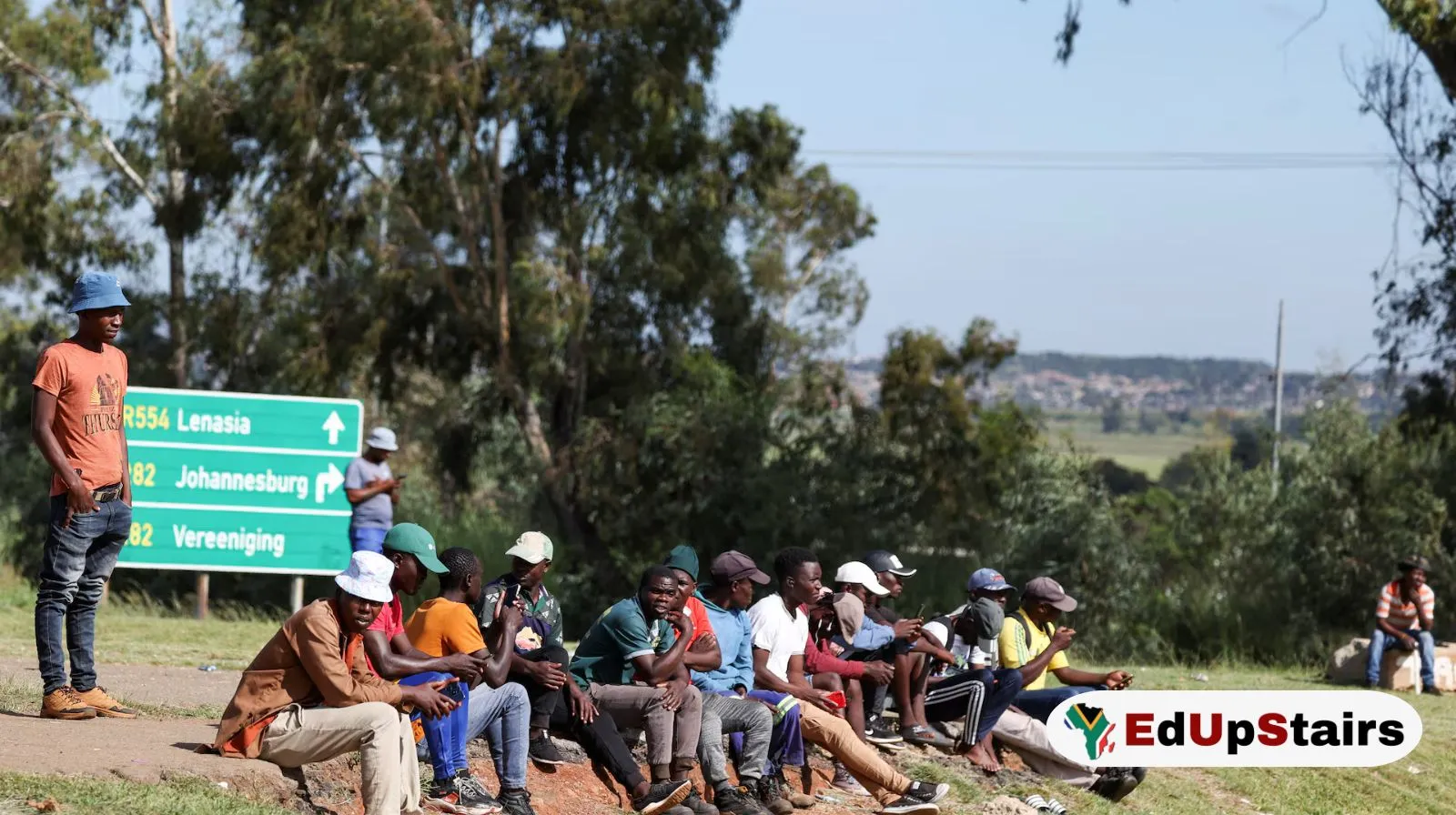
South Africa may soon enter a new era of social support as government continues discussions around introducing a permanent form of basic income assistance for unemployed adults.
For years, the Social Relief of Distress (SRD) grant has provided temporary financial relief to millions of people struggling to survive without jobs or stable income. But now, policymakers are increasingly discussing whether the country should replace or redesign the SRD grant into a more permanent system known as Basic Income Support (BIS).
This debate comes at a time when South Africa continues to face extremely high unemployment, rising food prices, growing inequality, and increasing pressure on government finances.
While no final decision has been made yet, recent statements from government officials and policy discussions suggest that South Africa is seriously considering long-term income support for working-age adults.
Quick Overview
- Current grant involved: SRD Grant (R370 per month)
- Proposed future system: Basic Income Support (BIS)
- Target group: Unemployed adults aged 18–59
- Current SRD extension: Until March 2027
- Estimated beneficiaries: Around 8 million people
- Main debate: Whether South Africa can afford permanent income support
- Possible future model:
- Skills development linked support
- Job-seeker registration
- Employment pathway participation
- Expanded social protection system
Why South Africa Is Discussing Basic Income Support
South Africa has one of the highest unemployment rates in the world. Millions of people remain unemployed for years despite actively searching for work.
The SRD grant was originally introduced during the COVID-19 lockdown period as an emergency measure to support unemployed adults who had no income. However, after the pandemic ended, government repeatedly extended the grant because economic conditions remained difficult.
Over time, the SRD grant became a financial lifeline for millions of households.
Government has acknowledged that many people still depend on this support to survive. During recent national discussions and budget announcements, leaders confirmed that South Africa is developing a longer-term alternative to replace the temporary SRD system.
President Cyril Ramaphosa previously stated that government is working on “targeted basic income support” linked to livelihoods and economic participation.
What Is Basic Income Support?
Basic Income Support refers to a system where unemployed or low-income adults receive regular financial assistance from the state.
In South Africa’s current discussions, this does not necessarily mean every citizen would automatically receive money. Instead, government appears to be considering a targeted support system focused mainly on vulnerable unemployed adults.
Different models are currently being debated:
- Universal Basic Income Grant (UBIG)
- Every adult receives financial support regardless of income
- Targeted Basic Income Support (BIS)
- Only qualifying unemployed or vulnerable adults receive support
- Livelihoods Support Model
- Financial support linked to skills training, job-seeking, or public employment programmes
Government officials have increasingly used the term “Basic Income Support” rather than “Universal Basic Income Grant,” suggesting that South Africa may prefer a targeted system instead of a fully universal one.
The SRD Grant Could Become the Foundation
Many analysts believe the SRD grant is already functioning as a pilot version of future basic income support.
The Department of Social Development has indicated that the SRD system helped government test:
- Payment systems
- Verification processes
- Digital applications
- Fraud prevention systems
- Large-scale beneficiary administration
Recent reports suggest the SRD grant may eventually be redesigned into a broader livelihoods support programme linked to employment opportunities and skills development.
Some proposals under discussion include:
- Linking beneficiaries to job databases
- Encouraging participation in skills programmes
- Connecting recipients to public employment programmes
- Supporting entrepreneurship and self-employment pathways
This would represent a major shift away from purely emergency relief toward longer-term social and economic support.
Why Supporters Want Permanent Basic Income
Supporters argue that South Africa’s unemployment crisis is too severe for temporary measures.
Civil society organisations, labour groups, and poverty researchers say millions of people remain trapped without income despite trying to find work.
Supporters of basic income believe it could:
Reduce Extreme Poverty
Many households depend entirely on grants to buy food, transport, electricity, and basic necessities.
Supporters argue that permanent support could help reduce hunger and improve household stability.
Improve Economic Activity
Some economists believe grants help local economies because recipients spend money in their communities.
Money received through grants often supports:
- Small shops
- Taxi transport
- Food vendors
- Informal businesses
Help Job Seekers Survive
Unemployed people often need money for:
- Transport to interviews
- Internet access
- Data for online applications
- Printing CVs
- Basic living costs
Without any income, job-seeking becomes much harder.
Reduce Social Pressure
South Africa faces increasing pressure related to poverty, inequality, and youth unemployment.
Some analysts argue that stronger social protection could reduce desperation and improve social stability.
Concerns About Basic Income Support
Although many people support the idea, there are also major concerns.
Can South Africa Afford It?
One of the biggest debates is cost.
Government already spends hundreds of billions of rand on social grants every year.
Adding permanent support for millions of working-age adults could place significant pressure on the national budget.
Treasury officials continue to raise concerns about:
- Limited economic growth
- Rising government debt
- Tax revenue pressure
- Long-term sustainability
Fear of Dependency
Some critics argue that permanent grants could discourage employment seeking.
However, many researchers and advocacy groups disagree with this argument and say most unemployed South Africans actively want jobs but cannot find them.
Administrative Challenges
South Africa has also faced problems involving:
- Fraud detection
- Verification systems
- Payment delays
- Appeal backlogs
- Identity verification disputes
A permanent system would require stronger administration and reliable funding.
What Government Has Said So Far
Recent statements suggest government is continuing policy consultations on a future Basic Income Support model.
The Department of Social Development has reportedly been refining:
- Funding models
- Economic impact assessments
- Eligibility structures
- Policy frameworks
At the same time, the SRD grant has been extended until March 2027 while these discussions continue.
However, some parliamentary committees and advocacy organisations have criticised the slow pace of progress, arguing that millions of unemployed people cannot continue living with uncertainty.
Could the Future Grant Be Conditional?
One important issue is whether future support will come with conditions.
Some proposals suggest beneficiaries may need to:
- Register as job seekers
- Participate in training programmes
- Engage in work readiness initiatives
- Accept available public employment opportunities
This model is sometimes described as a “livelihoods support” approach rather than unconditional basic income.
Critics worry that overly strict conditions could exclude vulnerable people who already struggle with transport costs, internet access, or lack of nearby opportunities.
How This Could Affect Young South Africans
Young people could be heavily affected by any future changes.
South Africa’s youth unemployment crisis remains extremely severe, with many matriculants, graduates, and TVET students unable to secure jobs.
If government introduces a redesigned support system, young unemployed adults may need to:
- Keep documents updated
- Register on employment databases
- Participate in skills programmes
- Monitor SASSA announcements carefully
Future support may become more connected to employability and labour market participation.
What Happens Next?
At this stage, South Africa has not officially approved a permanent Basic Income Support system.
However, discussions are clearly advancing.
Government departments continue consulting on:
- Funding mechanisms
- Policy design
- Eligibility rules
- Economic impacts
- Employment linkages
The biggest question remains whether South Africa can balance social protection with long-term economic sustainability.
For millions of unemployed people, the outcome of these discussions could shape the future of income support in South Africa for many years.
Edupstairs Advice
South Africans should avoid relying on rumours or social media claims regarding new grants.
At the moment:
- No permanent Basic Income Support grant has officially started
- No final eligibility rules have been announced
- No application process for a new BIS grant has opened yet
Unemployed youth should continue:
- Updating their CVs
- Registering on job platforms
- Applying for learnerships and internships
- Following official SASSA and government announcements
If a new support system is eventually introduced, official information will likely be published through verified government channels.
Frequently Asked Questions
- Is South Africa introducing a permanent Basic Income Grant?
Not yet. Government is still discussing possible Basic Income Support models.
- Will the SRD grant end soon?
The SRD grant has been extended until March 2027 while policy discussions continue.
- Will everyone qualify for future basic income support?
Current discussions suggest support may be targeted rather than universal.
- Could future grants require job-seeking participation?
Possibly. Some proposals involve linking support to employment and skills programmes.
- How much is the SRD grant currently?
The SRD grant currently pays R370 per month.
You can also:
- View latest Internships
- View latest Learnerships
- View Latest Bursaries
- View latest Government jobs
- View latest Company Vacancies
- View latest Municipality vacancies
- Visit the Edupstairs blog for daily updates
Disclaimer
This article is for informational purposes only. Government policy discussions regarding Basic Income Support are still ongoing, and no final system has been officially approved at the time of publication.
EDUPSTAIRS IS A REGISTERED NON-PROFIT ORGANISATION NPO No: 232 – 182, PUBLIC BENEFIT ORGANISATION (PBO): 930066984. EDUPSTAIRS DOES NOT, IN ANY WAY OR FORM, SOLICIT MONEY OR CV’S FROM PEOPLE FOR JOBS. PLEASE BE AWARE OF PHONY JOB POSTINGS AND RECRUITMENT FRAUD. USE THE EDUPSTAIRS SCAM DETECTOR TOOL TO SPOT A SCAM BEFORE YOU APPLY