
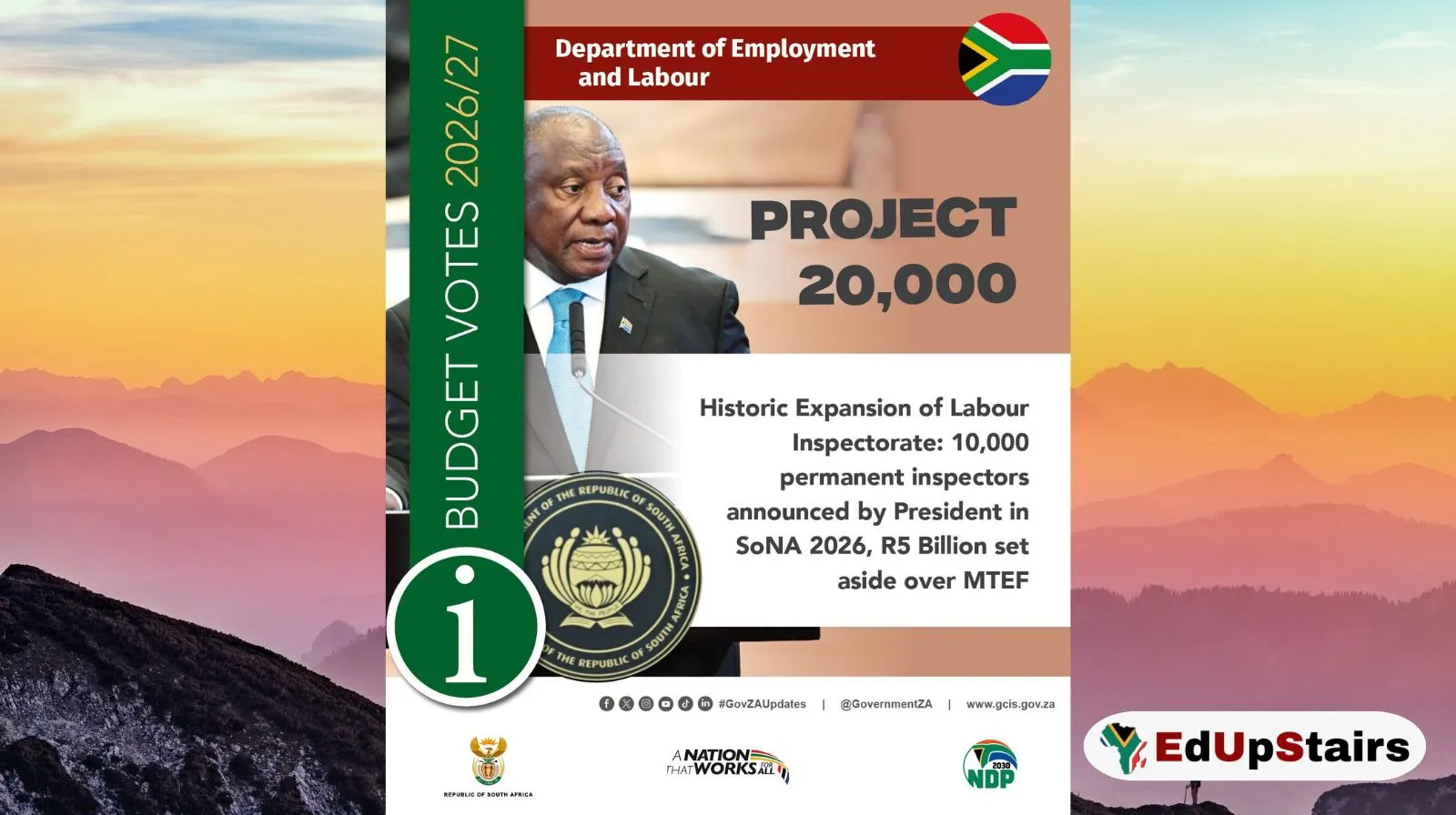
South Africa’s Department of Employment and Labour has announced one of the biggest labour inspectorate expansion plans in recent years. Under what is being referred to as “Project 20,000,” government aims to strengthen labour law enforcement across the country by significantly increasing the number of labour inspectors.
President Cyril Ramaphosa announced during the 2026 State of the Nation Address (SoNA) that 10,000 permanent labour inspectors will be added as part of a historic expansion of the labour inspectorate. Government has also reportedly set aside R5 billion over the Medium-Term Expenditure Framework (MTEF) to support the initiative.
For many unemployed South Africans, especially young people looking for stable government employment, this announcement may signal future opportunities in the public service sector.
Quick Overview
- Programme Name: Project 20,000
- Department: Department of Employment and Labour
- Type of Opportunity: Potential future government employment expansion
- Number of Planned Inspectors: 10,000 permanent labour inspectors
- Announcement Source: President Cyril Ramaphosa during SoNA 2026
- Budget Allocation: R5 billion over the MTEF period
- Sector: Public Service / Labour Enforcement
- Country: South Africa
- Employment Type: Permanent government positions
- Current Status: Expansion announced, recruitment details still pending
- Target Beneficiaries: South Africans seeking government employment opportunities
What Is Project 20,000?
Project 20,000 appears to be a large-scale government initiative aimed at strengthening South Africa’s labour inspection capacity. Labour inspectors play a critical role in ensuring that employers comply with labour laws, workplace safety regulations, employment standards, UIF obligations, and other labour-related legislation.
For years, labour unions, workers, and policy experts have argued that South Africa does not have enough inspectors to effectively monitor workplaces. Many employers, especially in vulnerable sectors, have reportedly operated without proper oversight due to shortages in enforcement staff.
This new expansion could dramatically change that.
The announcement of 10,000 permanent inspectors suggests government intends to significantly increase enforcement capacity while also creating long-term public sector jobs.
For unemployed graduates, matriculants with relevant qualifications, and individuals interested in labour relations or public administration, this could become one of the most important public employment developments of 2026 and beyond.
Why This Announcement is Important
South Africa continues to face extremely high unemployment rates, particularly among young people. Every major government recruitment announcement immediately attracts national attention because permanent government jobs are often viewed as stable and secure employment opportunities.
Project 20,000 matters for several reasons:
- Potential Mass Employment Creation
If fully implemented, this could become one of the largest labour-related recruitment drives in recent years.
The possibility of 10,000 permanent positions means thousands of households could benefit from long-term income opportunities.
- Permanent Government Jobs
Unlike short-term EPWP contracts or temporary public employment programmes, the poster specifically mentions permanent inspectors.
Permanent government employment usually includes:
- Monthly salary
- Pension benefits
- Medical aid opportunities
- Leave benefits
- Career progression
- Training opportunities
- Strengthening Worker Protection
Labour inspectors help enforce laws relating to:
- Minimum wage compliance
- UIF registration
- Occupational health and safety
- Working conditions
- Illegal dismissals
- Child labour prevention
- Employment Equity compliance
Increasing the number of inspectors could improve worker protection across South Africa.
- Opportunities for Young Professionals
This initiative may eventually create demand for people with backgrounds in:
- Labour relations
- Human resources
- Public administration
- Law
- Occupational health and safety
- Compliance management
- Industrial relations
What Does a Labour Inspector Do?
Many South Africans may not fully understand the role of labour inspectors.
Labour inspectors typically visit workplaces to ensure employers comply with labour laws and regulations.
Their duties may include:
- Conducting workplace inspections
- Investigating labour complaints
- Monitoring health and safety compliance
- Checking UIF and employment records
- Ensuring workers receive legal protections
- Educating employers about labour legislation
- Issuing compliance notices where necessary
Inspectors often work in sectors such as:
- Retail
- Construction
- Manufacturing
- Hospitality
- Agriculture
- Domestic work
- Mining
- Security services
Possible Requirements for Future Inspector Posts
At this stage, government has not yet released official recruitment advertisements linked to Project 20,000. However, based on previous labour inspector vacancies, applicants may potentially need some of the following:
Possible Basic Requirements
- South African citizenship
- Valid South African ID
- Grade 12 / Matric certificate
- Relevant diploma or degree
- Good communication skills
- Computer literacy
- Valid driver’s licence
- No criminal record
Relevant Qualifications That May Help
The following qualifications could become advantageous:
- Labour Relations
- Human Resource Management
- Public Administration
- Law
- Industrial Psychology
- Occupational Health and Safety
- Compliance Management
- Business Administration
Skills That Could Be Important
- Report writing
- Investigation skills
- Problem solving
- Communication
- Conflict management
- Attention to detail
- Understanding labour laws
When Will Applications Open?
At the moment, the government only confirms the announcement and budget allocation. Recruitment timelines have not yet been officially published.
South Africans should therefore be cautious about scams or fake recruitment messages claiming applications are already open.
Future vacancies will most likely be advertised through official government channels such as:
- The Department of Employment and Labour website
- DPSA vacancy circulars
- Government social media pages
- Public service recruitment portals
Official DPSA vacancies portal: DPSA Vacancy Circulars
How South Africans Can Prepare Early
Even though applications may not yet be open, there are practical steps people can take now to improve their readiness.
Prepare Your Documents
Ensure you have:
- Updated CV
- Certified ID copy
- Certified qualifications
- Academic transcripts
- Driver’s licence copy
- SARS tax number
- UIF details if applicable
Improve Your Skills
Consider short courses in:
- Labour law
- Occupational health and safety
- Compliance management
- Administration
- Communication skills
- Computer literacy
Monitor Official Announcements
Avoid relying only on social media forwards. Instead:
- Regularly check official government websites
- Follow trusted opportunity platforms
- Watch for verified vacancy circulars
What This Could Mean for South Africa
Project 20,000 is not only about jobs. It also reflects a broader effort to improve labour law enforcement and workplace accountability.
If implemented successfully, the expansion could help:
- Reduce workplace exploitation
- Improve compliance with labour laws
- Strengthen worker protections
- Improve occupational safety
- Increase formal employment regulation
At the same time, the programme could inject thousands of salaries into local economies and create career pathways for many South Africans.
Edupstairs Advice
South Africans should treat this announcement as an early opportunity signal rather than an active recruitment process for now.
This is the right time to prepare documentation, improve qualifications, and monitor official government channels closely. Large public service recruitment drives usually attract huge numbers of applicants, meaning preparation can make a major difference.
Be careful of scams requesting payment for applications or promising guaranteed placement. Legitimate government job applications are normally free.
If Project 20,000 moves into full recruitment phases, competition is expected to be very high because permanent government jobs remain among the most sought-after employment opportunities in South Africa.
Frequently Asked Questions (FAQ)
- Is Project 20,000 officially confirmed?
Yes. The government poster references the announcement made during SoNA 2026 and mentions budget allocation for the labour inspectorate expansion.
- Are applications open already?
No official recruitment advertisements linked to this project have been released yet.
- Will these be permanent jobs?
According to the address, the plan includes 10,000 permanent inspectors.
- Who can apply?
Official requirements have not yet been published, but relevant qualifications and skills may become important.
- Where will vacancies be advertised?
Likely through official government channels including the Department of Employment and Labour and DPSA vacancy circulars.
- Is there a closing date?
No application process has been announced yet.
You can also:
- View latest Internships
- View latest Learnerships
- View Latest Bursaries
- View latest Government jobs
- View latest Company Vacancies
- View latest Municipality vacancies
- Visit the Edupstairs blog for daily updates
Disclaimer
This article is based on publicly available government communication regarding Project 20,000 and the labour inspectorate expansion announcement. Recruitment details, requirements, and timelines may change once official vacancy advertisements are released. Applicants should always verify information through official government sources.
EDUPSTAIRS IS A REGISTERED NON-PROFIT ORGANISATION NPO No: 232 – 182, PUBLIC BENEFIT ORGANISATION (PBO): 930066984. EDUPSTAIRS DOES NOT, IN ANY WAY OR FORM, SOLICIT MONEY OR CV’S FROM PEOPLE FOR JOBS. PLEASE BE AWARE OF PHONY JOB POSTINGS AND RECRUITMENT FRAUD. USE THE EDUPSTAIRS SCAM DETECTOR TOOL TO SPOT A SCAM BEFORE YOU APPLY