
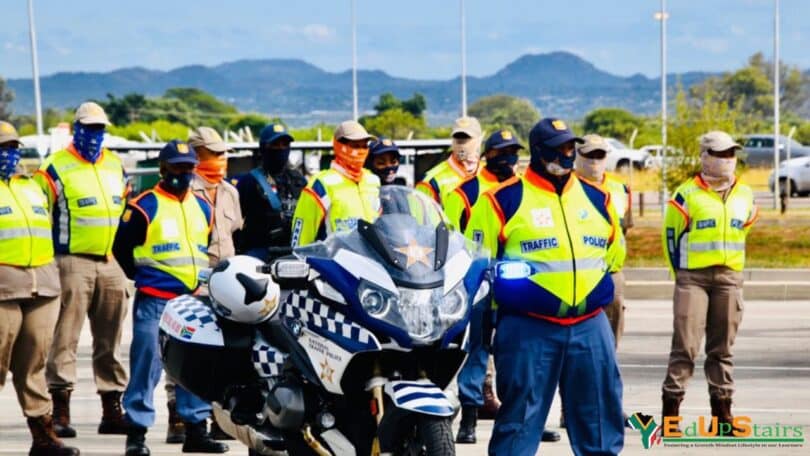
Pursuing a career as a traffic officer in South Africa is a noble and rewarding decision. However, for many aspiring candidates, the cost of training presents a major hurdle. The good news is that there are several funding options available, including SETAs, government bursaries, and more. This comprehensive guide will walk you through how to apply for funding if you are pursuing a Traffic Officer Training Opportunity in 2025. Whether you’re fresh out of school or switching careers, we’ve got you covered.
What Is Traffic Officer Training?
Traffic Officer Training in South Africa is offered at accredited traffic colleges and prepares candidates to enforce road safety laws and manage traffic regulations. The training includes theoretical modules and practical sessions and is usually offered over a 12-month period.
Basic Entry Requirements:
- South African ID
- Grade 12 certificate
- No criminal record
- Valid Code B driving license
- Medically and physically fit
Traffic Officer Training is structured to provide a fertile environment for the development of the student traffic officer. Members will have the opportunity to develop a thorough knowledge of the NRTA 93/96 (National Road Traffic Act, Act 93/96) and other related legislation. Overall, the course will focus on those issues which will equip the officer to execute his duties as a traffic officer in a professional manner.
The course is divided into 38 core modules. They are:
| Unit 1: | Discipline and Code of Conduct/Compliments and Saluting |
| Unit 2: | Traffic Management |
| Unit 3: | Labour Relations and Occupational Safety |
| Unit 4: | SA Law |
| Unit 5: | Criminal Law |
| Unit 6: | Law of Criminal Procedure |
| Unit 7: | Law of Evidence |
| Unit 8: | Use of Force |
| Unit 9: | Constitutional Law |
| Unit 10: | Appointment and Powers |
| Unit 11: | Point Duty |
| Unit 12: | Administration and Discontinue Notices |
| Unit 13: | National Road Traffic Act 93/96 |
| Unit 14: | Driving Under the Influence |
| Unit 16: | Systematic Examination of Vehicles |
| Unit 17: | Vehicles Excluded from Certain Regulations |
| Unit 18: | Loads on Vehicles |
| Unit 19: | Dimensions and Projections |
| Unit 20: | Abnormal Vehicles |
| Unit 21: | Basic Accident Recording |
| Unit 22: | Incident Management |
| Unit 23: | Administrative Powers |
| Unit 24: | Other Auxiliary Functions |
| Unit 25: | Mock Courts |
| Unit 26: | Selected Firearm Skills |
| Unit 27: | Tactical Pursuit: Stop and Approach |
| Unit 28: | Physical Education |
| Unit 29: | Physical Fitness |
| Unit 30: | Principles of Proactism |
| Unit 31: | Crime Prevention |
| Unit 32: | Police Professionalism |
| Unit 34: | First Aid |
| Unit 35: | Dangerous Goods Act 15 of 1973 / National Road Traffic Act 93/96 |
| Unit 36: | Basic Fire Fighting |
| Unit 37: | National Land Transport Transition Act (NLTTA) |
| Unit 38: | Administrative Adjudication of Road Traffic Offences Act (AARTO) |
Does NSFAS Fund Traffic Officer Training?
One of the most frequently asked questions is whether the National Student Financial Aid Scheme (NSFAS) funds Traffic Officer Training.
Answer: No, NSFAS does not currently fund Traffic Officer Training, as these programs are usually not offered at public universities or TVET colleges, which are NSFAS-funded institutions. Instead, applicants must look for alternative funding sources such as SETAs, bursaries, or government departments.
List of Accredited Traffic Officer Training Providers
- Boekenhoutkloof Traffic College (Pretoria)
- Gene Louw Traffic College (Brackenfell, Western Cape)
- Lengau Traffic Training College (Free State)
- KZN Traffic Training College (Pietermaritzburg)
- Middelburg Traffic Training College (Mpumalanga)
- Eastern Cape Traffic Training College (Port Elizabeth)
Ensure that the training provider is accredited by the Safety and Security Sector Education and Training Authority (SASSETA) before applying.
Funding Through SETAs
SETAs (Sector Education and Training Authorities) play a significant role in funding vocational training in South Africa. For Traffic Officer Training, these are the most relevant SETAs:
- SASSETA – Main funder for law enforcement and traffic-related careers.
- LGSETA (Local Government SETA) – May fund municipal traffic officer training.
- TETA (Transport Education and Training Authority) – Funds roles within the transport and logistics sector.
How to Apply for SETA Funding:
- Visit the relevant SETA website.
- Register on their database.
- Look for learnerships, bursaries, or discretionary grant opportunities.
- Submit all required documentation (ID, matric certificate, motivation letter, etc.).
Government Departments That May Fund Traffic Officer Training
- Provincial Departments of Transport – Check for bursary announcements.
- Municipalities – Many municipalities offer learnerships for traffic officers.
- Department of Community Safety and Transport Management (varies by province).
Tips:
- Regularly check their websites and social media.
- Register on local government job portals.
Private Bursaries and NGOs
Although rare, some private companies and NGOs support traffic officer training as part of community development or road safety initiatives.
Potential Funders:
- Road Accident Fund (RAF)
- Arrive Alive Foundation
- Private logistics companies (e.g., Imperial Logistics)
Tip: Network and ask at training colleges for partner organizations.
Step-by-Step Guide to Apply for Funding
- Research Accredited Colleges
- Check Eligibility Criteria
- Choose the Right Funder (SETA, Municipality, etc.)
- Prepare Application Documents:
- ID Copy
- Certified Matric Certificate
- Driver’s License
- Medical Clearance Certificate
- Motivation Letter
- Submit Applications Online or In-Person
- Follow Up and Stay Informed
Tips to Strengthen Your Application
- Write a compelling motivation letter.
- Get recommendation letters.
- Ensure all documents are certified and updated.
- Apply early – don’t wait for closing dates.
- Highlight community involvement or volunteer work.
Becoming a traffic officer is an excellent way to serve your community and build a stable career. While funding may seem hard to find, opportunities do exist through SETAs, government departments, and community-based initiatives. Use this guide as your roadmap to securing financial support for your training. Take action today and invest in your future as a law enforcement professional on South Africa’s roads.
EDUPSTAIRS IS A REGISTERED NON-PROFIT ORGANISATION NPO No: 232 – 182, PUBLIC BENEFIT ORGANISATION (PBO): 930066984. EDUPSTAIRS DOES NOT, IN ANY WAY OR FORM, SOLICIT MONEY OR CV’S FROM PEOPLE FOR JOBS. PLEASE BE AWARE OF PHONY JOB POSTINGS AND RECRUITMENT FRAUD. FOR MORE INFORMATION VISIT OUR SCAM/FRAUD ALERT PAGE HERE
You May Also Like…
HOW TO SECURE A PERMANENT GOVERNMENT JOB IN SOUTH AFRICA FOR PEOPLE WITHOUT MATRIC
HOW TO BECOME A TRAFFIC OFFICER IN SOUTH AFRICA AFTER COMPLETING YOUR MATRIC
How Much is the Stipend Paid by SETA Learnerships in South Africa for 2025?